
When I talk to new clients, there’s always one question that keeps returning: “Why do you recommend Laravel for custom apps?” My answer is simple, yet layered, in today’s fast-changing web landscape, you need reliability, safety, and growth built right into your project from the ground up. That’s what my Laravel development services offer, and if you’re here, you’re probably looking for a freelancer who can help you cross that finish line.
Why Laravel stands out for modern development
In my 16+ years in backend and full-stack development, I’ve worked with nearly every mainstream framework. I’ve seen trends shift, yet some fundamentals never change, you want projects that run smoothly, keep your data secure, and scale to thousands (or millions) of users without a hiccup. That’s why I put my trust in Laravel for clients who expect their apps to grow as their business grows.
Laravel brings a mix of flexibility and discipline. It’s built on the tried-and-true MVC (Model-View-Controller) pattern, making apps clean, organized, and surprisingly easy to extend. Whether you’re after an e-commerce store, a SaaS tool, or a data dashboard, Laravel provides a solid base.
Let me share a quick story: Several years ago, a startup approached me to rebuild their booking system, frustrated by slow response times and scattered security issues. Their existing code was a mess. Using Laravel, I crafted a new structure, then migrated features one by one. Three months later, their average booking handled over 10 times the previous load, and data leaks became a distant memory. That’s the difference careful planning and the right tools can offer.
- Modern syntax makes code easy to read, so teams ramp up faster.
- Composer integration means managing dependencies is simple, helping avoid the tangled mess I see in older PHP projects.
- Laravel’s ecosystem (like Horizon for queues, Passport for OAuth, Sanctum for tokens) keeps adding robust tools tailored to business needs.
How the MVC pattern enables manageable, scalable apps
The MVC architecture is more than just a buzzword, it’s a design that separates concerns, transforming maintenance from a headache into a painkiller. Here’s why I build with this pattern:
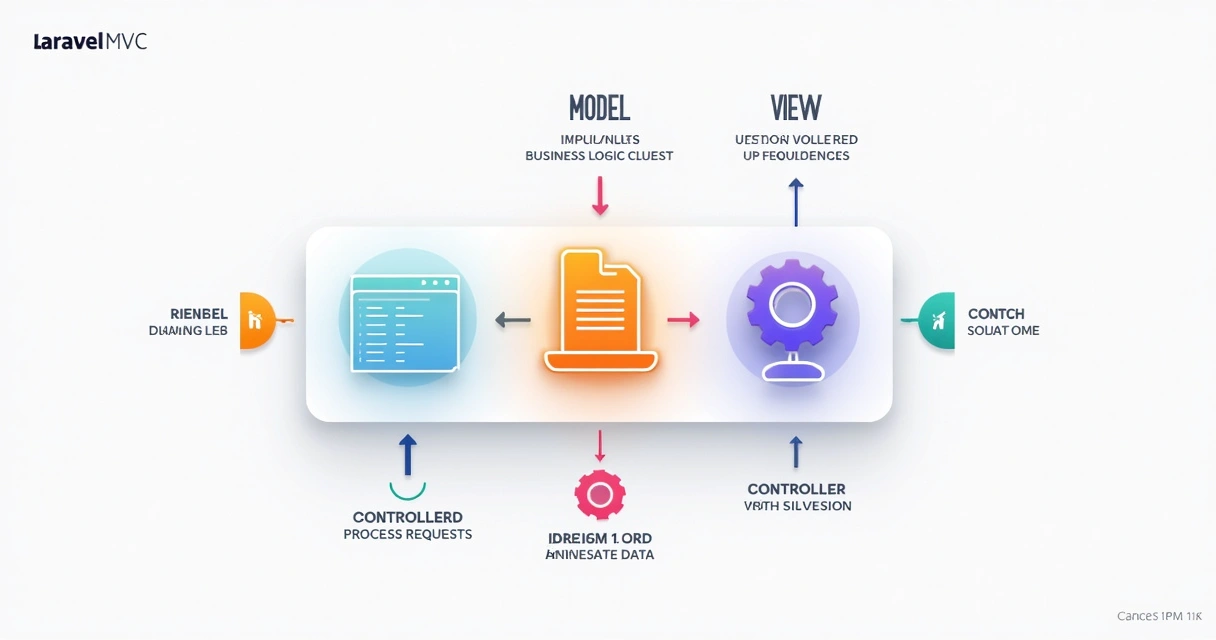 Splitting code by responsibility means each layer works independently, if I need to change business logic, it won’t affect how data is displayed. This separation has two strong perks:
- Scalability: When traffic floods in, bottlenecks are easier to spot (and fix) because each part of your app is focused on a single job.
- Long-term maintenance: You can add features or squash bugs with less risk, since everything’s neatly divided.
In my process for custom Laravel app development, I always start by mapping out these MVC layers with the client. This makes onboarding new developers a breeze, even a different team can step in three years later and understand what’s going on. That’s a promise I can deliver.
Custom web apps: solving real business needs with Laravel
Many businesses make the mistake of shoehorning their unique processes into generic plug-and-play tools. Eventually, this approach reaches a dead end. Laravel is the base that allows me to build tailored web solutions that really fit what your team needs.
Every custom app I design starts with the question: “What makes your workflow different, and how can we make it run quicker and safer?”
Let’s walk through a typical sequence when I craft a Laravel-powered app:
- Requirements consulting, align on user flows, data sources, pain points.
- Early wireframes, map out core screens and data structures together.
- Database design, set up models and migrations that mirror real business data.
- Controllers and logic, build out CRUD, validation, permissions.
- Views and UX tweaks, focus on a clean, consistent interface.
- Testing and deployment pipeline (with CI/CD tools like GitHub Actions)
- Production rollout, training, monitoring, regular updates.
For example, in a recent SaaS dashboard project, my client needed flexibility to manage user roles and custom reports. Laravel’s rich set of features (like policies, gates, and jobs) made it simple to add just the functionality they needed, and nothing else. The result? Higher user adoption, fewer mistakes, and a system that never felt bulky or slow.
Building secure APIs: data exchange done right
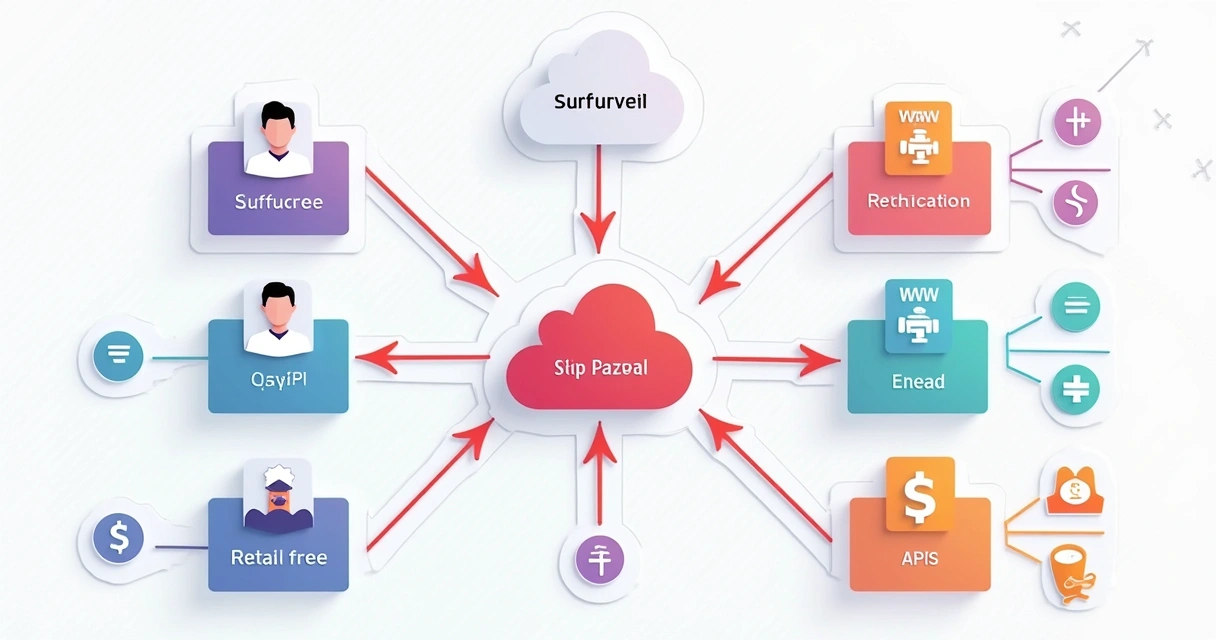
APIs are the backbone of modern systems. Whether connecting your app to a mobile client, syncing with third-party services, or serving your own internal tools, safe and efficient API development is one of my specialties.
Laravel shines for robust API projects, especially with packages like Sanctum for authentication and throttling, and proper request validation to keep attacks out.Some real benefits of Laravel API development include:
- Automated Eloquent serialization: Clean transformation of models into JSON, with full control over data exposure.
- Rate limiting out of the box: Protect your endpoints against brute-force or denial-of-service spikes.
- Simple authentication: Quickly set up token auth, or integrate with OAuth, thanks to Laravel Passport.
- Versioning strategies that don’t break existing clients.
- Custom middlewares to filter and secure requests on any route.
I recently helped a healthcare startup prepare for HIPAA requirements, drawing on studies such as those from the Office of the National Coordinator for Health IT, which highlights how the shift to digital patient data demands rigid protection and secure data exchange. With Laravel’s powerful policies and flexible API tools, we designed an integration layer handling thousands of encrypted requests per day, and I sleep better knowing those records are safe.
APIs are the invisible glue, they need to be both strong and invisible.
Microservices with Laravel: modular solutions for growing teams
When your business hits new milestones, the old “all-in-one” app approach can become a bottleneck. Microservices let you keep moving fast by splitting big systems into smaller, focused pieces. Laravel is perfect for this approach.
Breaking down features into small, independent Laravel apps makes teams more agile, deploys safer, and changes less painful.
From my experience, here’s what I love about Laravel for microservices:
- Easy API-first design with built-in routing and serialization.
- Clear separation by business function (user service, payment, inventory, etc.).
- Queue workers for intense background jobs (image processing, notifications).
- Seamless integration with cloud tools (like AWS Lambda, SQS, or SNS) for horizontal scaling.
On several projects, I kept costs down for my clients by containerizing Laravel microservices with Docker, spinning up new components as needs changed. This approach meant that even for holiday traffic spikes or unexpected press mentions, nothing ever came crashing down. Management becomes as simple as shuffling services in or out, adding nodes on AWS, or rolling back just one feature instead of the whole app.
Security: how Laravel protects your data and users
Security is never just about ticking boxes, it’s about peace of mind for your team and customers. I put safety at the core of every Laravel solution I deliver. What makes Laravel a standout for secure apps?
- First-party packages like Laravel Breeze or Jetstream provide instant, well-tested login and registration.
- Password hashing uses bcrypt or Argon2i right out of the box, no more risky plaintext storage.
- Built-in XSS and SQL injection prevention in Blade templates and database queries.
- Features like signed URLs and email verification help stop unauthorized access.
Vulnerabilities can never be ignored. For instance, the National Vulnerability Database reported a blade XSS vulnerability affecting older Laravel releases, but quick patching resolved the issue. Laravel’s dedicated security team means you can count on timely updates. I keep every project I manage on stable, supported versions, so you’re never left exposed. The same holds true for toolchains, shown by the rapid fix for Laravel Pulse, fast, responsible corrections you can trust.
Security updates are not optional, they’re mandatory for business continuity and customer trust.In every project, I:
- Enforce strong password and session policies.
- Enable two-factor authentication where needed.
- Set up server-side request forgery protections and CSRF tokens throughout forms.
- Perform code audits and automate dependency checks in CI pipelines.
Strong, proactive habits keep your data, your business, and your customers locked tight. For healthcare, finance, ecommerce, sectors where trust is everything, I never compromise.
Scaling for peak traffic: caching, queueing, cloud
You might start with 100 users, but what about 10,000, or 1 million? The scale of your app shouldn’t be a surprise; it should always be a planned destination. I set up every Laravel site to manage growth from day one.
- Cache everything you can. Whether using Redis, Memcached, or Laravel’s own cache drivers, this step turns database calls into lightning-fast lookups.
- Offload heavy tasks to queues. Image processing, sending emails, or dispatching notifications shouldn’t slow down real-time requests. Queue drivers like Redis, Beanstalkd, or SQS make this painless.
- Stateless session storage for autoscaling environments. Store sessions in Redis or DynamoDB, not in local files, so multiple servers can handle requests smoothly.
- Optimize database queries. Profile slow queries, add smart indexes, and, when the time is right, use read/write database splitting.
Time and again, I’ve seen apps choke under promotional surges or seasonal spikes. My commitment is simple: your Laravel-powered system will be ready for peaks from the very beginning.
On high-traffic builds, I use infrastructure tactics like:
- CDNs to distribute front-end assets and API responses near users worldwide.
- Horizontal scaling with Docker and auto-provisioning in AWS (ECS, Lambda) to add capacity before times of need.
- Advanced monitoring with tools like Laravel Pulse, Sentry, or custom Grafana dashboards.
I recently improved a client’s cloud-based ecommerce with real-time product feeds. During Black Friday, their site handled nearly 30x the standard volume with no outages. That wasn’t luck, it was careful planning and the best out-of-the-box features Laravel offers.
Ecommerce and SaaS: proven results with Laravel
Businesses ask: How does Laravel stack up for mission-critical projects like online stores or multi-tenant SaaS? The results speak for themselves.
Ecommerce success stories
In an online retail project for a fashion brand, I set up flexible catalogs, layered promotions, and real-time inventory synching with their warehouse. Using Laravel’s queue system, all order events (from payment to fulfillment) processed in the background, freeing up resources for buyers and managers. Customers get instant responses, staff enjoys clear order dashboards, and returns/repairs are no longer manual nightmares.
Laravel’s event-driven design transforms one-off actions into robust, trackable workflows, making scaling to hundreds of daily orders frictionless.
SaaS projects: one codebase, many clients
Multi-tenant SaaS can be complex. But Laravel’s tools like tenant-specific middleware, dynamic database connections, and isolated data structures mean you can confidently give each customer their own space, without rebuilding from scratch. My experience with B2B SaaS platforms leans heavily on Laravel’s ability to balance multi-tenant isolation with easy centralized management.
One elegant codebase, many happy customers.
If you need an example of how I deliver these outcomes, the in-depth guide at Laravel development for scalable apps breaks down some real-world cases, including these fields:
- Automated report generation for analytics SaaS companies.
- Live chat interfaces for customer support startups.
- Remote workforce time-tracking for distributed teams.
- Subscription management for membership-driven businesses.
Best practices: quality, speed, and easy maintenance
Quality is not an accident. I bring a set of habits, routines, and tools to every project I deliver. Some of my trusted best practices:
- Layered architecture: Every logic segment is separated, models, repositories, controllers. Changes stay contained.
- DRY (Don’t Repeat Yourself): Common code (validation, enums, access checks) sits in one place, reducing errors and slashing onboarding time for team members.
- PSR coding standards: My code always meets PHP-FIG standards, so it looks, reads, and works the same no matter who touches it.
- Automated tests (unit and feature): I write thorough tests, not just to catch bugs, but to ensure refactorings never break old workflows.
- Code reviews and static analysis: Every pull request gets a close look, and tools like PHPStan or Psalm give another layer of security.
- Deployment with CI/CD: I automate deployments (with tools like GitHub Actions or Envoyer), cutting out human mistakes, and enabling instant rollbacks if needed.

Fast, clean, readable code cuts down on future costs, it’s one of the wisest investments you can make.
There are agencies and freelancers out there who say they use best practices, but with me, you get transparency: I’ll show you the code, run the tests, and walk you through every layer. My reputation as a consultant is built on reliability, not just clever marketing.
Integrating AI and AWS: adding smart features and cloud power
These days, my clients often ask about two things: “Can we make the system smarter?” and “Will the app work in the cloud?” The answer is yes, and Laravel is ready.
Adding AI into your Laravel app
I’ve delivered several projects with AI-driven features, from chatbots (trained on historical support tickets) to recommendation engines for e-commerce. Laravel plays well with AI SDKs (like OpenAI, AWS AI/ML, Google APIs), making integration as simple as adding a service class.
- For NLP tasks, I set up endpoints so AI processes text, summarizes, or flags content automatically.
- In commerce, I integrate “smart search” and personalized product lists using Python AI models, connected to Laravel via APIs.
- Error handling and graceful fallback routines ensure your app stays usable, even if outside AI services slow down or fail.
Cloud-native with AWS
Laravel’s out-of-the-box support for S3 (file storage), SES (transactional email), SQS (task queues), and EC2/RDS for scalable hosting means your app can live entirely in the cloud. My expertise extends to setting up rock-solid, automated deployments with CloudFormation, Docker, and ECS, so scaling happens before your users even realize traffic is growing.
- Autoscaling on demand, cost tracking, and full audit trails make AWS a natural fit.
- Scheduled jobs (like nightly reports, mass emails) run predictably, thanks to Laravel’s task scheduler and AWS’s reliable infrastructure.
- Backups, redundancy, and disaster recovery plan? Already baked in.
If you want to read more about scalable cloud options for web, check out my guide on Laravel for the cloud.
Real-world challenges: a senior consultant’s view
Over my career, I’ve helped startups, SMBs, and big organizations on four continents. I’ve seen trends, and real technical obstacles, shape what works and what doesn’t.
- Legacy migrations: I’ve rescued several projects where previous developers left an insecure or messy legacy codebase. Rebuilding with Laravel means moving toward long-term stability, less patching, and happier users.
- API-first thinking: Modern teams can’t wait for months between feature updates. An API-driven Laravel platform lets mobile, web, and external teams build on top of your data from day one.
- Security and compliance: Audits for insurance, health care or finance always look for the same thing, a trusted software supply chain, backed by regular security reviews and automated patching. Laravel checks every box, especially when paired with my constant monitoring and regular code reviews.
- Scaling up: Whether it’s launching a viral product feature or opening in a new country, my approach prepares your tech before the big day, not in a panic the day after something breaks.
- Building trust: Repeat clients are my best endorsement. I’ve had companies refer my services to others because I talk straight, keep my word, and always deliver maintainable code.
In my experience, app development is a collaboration. My clients bring their vision and domain expertise. I bring technical direction, clarity, and hard-earned shortcuts. Together, we build tools that last, and I never leave anyone stuck without a next step.
Getting started: what to expect working with me
If you’re looking at Laravel-based development for your next app, here’s how I approach each project with a laser focus on business outcomes:
- Initial consultation: You share your goals and pain points, no tech jargon needed.
- Clear proposals: Detailed outlines, honest timelines, and transparent pricing. No surprise charges, no unclear deliverables.
- Roadmap planning: We prioritize features for fast wins and early feedback. Nothing gets built in a vacuum.
- Frequent check-ins: You see progress weekly, always able to ask questions or tweak plans as needs change.
- Quality assurance: I never mark a milestone “done” until it’s tested, reviewed, and signed off by your team.
- Long-term support: After launch, I remain available for ongoing improvements, fixing bugs, adding new features, upgrading dependencies, and keeping everything secure.
I always recommend that anyone considering a serious Laravel project take a look at resources like this in-depth Laravel guide to get inspired and informed.
Building great software means choosing partners you can trust.
Conclusion: why choose my Laravel development solutions?
You have a choice, you could try an off-the-shelf agency, risk an unclear result with a freelancer focused on quick turnaround, or go with a partner who cares about your business goals as much as safe, scalable code.
My Laravel-based development services are shaped by real business needs, proven by 16 years of building and delivering high-stakes projects, and driven by clear communication, best-in-class security, and a personal commitment to your long-term success.
I don’t trade on buzzwords. I promise clarity, rapid communication, and solutions that don’t just work, they grow with you. Whether you need a custom marketplace, an API for your mobile team, a SaaS with AI features, or want to migrate from slow legacy systems, my approach is personal and effective. Your business is unique, your software should be too.
If you’re ready to bring your idea to life or want to see how a high-quality, future-ready app can move your company forward, reach out for a free, friendly consultation. Let’s build something great, together.
Frequently asked questions
What is Laravel development used for?
Laravel is a web application framework used to build all types of PHP-based web solutions, from e-commerce sites and SaaS platforms to REST APIs and internal business tools. It’s especially popular for projects that need speed, flexibility, and a solid security baseline. Because of its modular structure, Laravel can be adapted for custom dashboards, customer portals, booking systems, and much more. Many of my clients come to me looking for tailor-made software, and Laravel is my first recommendation for most modern projects.
How secure are Laravel web applications?
Laravel applications feature strong, built-in security layers: password hashing, CSRF protection, XSS and SQL injection controls, authentication and authorization middleware, and regular framework updates. Reports from platforms like the NIST database show that vulnerabilities are identified and fixed quickly. When you combine up-to-date Laravel features with my hands-on approach (code audits, automated testing, secure hosting), you get applications trusted even in the toughest industries like healthcare and finance.
Is Laravel good for scalable apps?
Laravel is one of the best frameworks for scaling to high traffic, thanks to its support for queues, caching, cloud integration, stateless sessions, and modular design. I have built apps that started with a few dozen users and scaled smoothly to tens of thousands or more, simply by planning ahead and using the scaling options Laravel offers. Paired with cloud platforms like AWS, Laravel apps can handle spikes, auto-scale, and stay reliable in enterprise scenarios.
How much does Laravel development cost?
The price for Laravel web development varies by project complexity, required features, team size, and timeline. Simple apps (like a landing page or brochure site) might start in the low thousands, while full ecommerce or advanced SaaS platforms are investments that can range from $10k to $100k+. My freelancer model means you pay for senior expertise, not agency overhead. I always provide transparent proposals and stick to agreed budgets, with milestones for easy tracking and control over spending.
Where to find expert Laravel developers?
If you want real expertise, look for Laravel developers with a proven portfolio, strong client references, and a clear understanding of security, scaling, and cloud integration. You’ll find those skills with my freelance services, combining 16+ years of hands-on development with business-focused consulting. For more details on what makes an expert, see my approach to custom Laravel solutions. Transparent communication, reliable support, and proven results, that’s what you get when partnering with me.