
If you are building an application for growth—one that may someday serve thousands or millions—scalability and security are never afterthoughts. My name is Adriano Junior, and as a Senior Software Engineer with over 16 years in the industry, I’ve helped startups and established companies transform good ideas into robust products with Laravel as the backbone. Today, I’m sharing my first-hand perspective on what makes Laravel-focused services the best path for growing, secure software.
Why Laravel for modern web applications?
When I started my journey as a developer, PHP frameworks looked very different from today. Laravel changed everything. Its clean syntax, built-in tooling, and active community made it my favorite choice for custom application projects. In my experience, Laravel stands out among PHP frameworks for delivering robust custom web apps, regardless of team size or ambition.
- Startups benefit from its rapid prototyping and flexible architecture.
- Enterprises appreciate its maintainability, modularity, and ability to scale horizontally.
Peer-reviewed examination of Stack Overflow statistics, such as in the analysis of Stack Overflow data, confirms Laravel’s ongoing importance in the PHP world. The combination of PHP, Laravel, MySQL, and JavaScript represents a backbone for modern app development.
Laravel transforms PHP into a powerhouse for scalable and secure apps.
What are Laravel development services?
In my daily work for clients, “Laravel development services” means more than just writing code. It covers every technical decision and business conversation that shapes your end product. I offer a blend of services that can take your idea from scratch to launch-ready—or step in anywhere in between for existing products.
- Custom application development (tailored to your specific business logic)
- API design and third-party integration
- Microservices architecture and distributed systems
- UI/UX planning and frontend development
- Performance scaling and cloud deployment
Each of these areas supports the goal of building an application that never buckles under growth and stays secure across every layer.
The types of Laravel solutions available
Custom web application development
From fintech to social platforms, one-size-fits-all tools miss out on your edge. I’ve built streamlined ERP systems, SaaS platforms, and eCommerce backends, all with Laravel as the core. What stands out is how easy it is to:
- Design domain-driven architectures for long-term growth
- Integrate specific business workflows—no workarounds or hacks
- Future-proof your investment through modular codebases
For a closer look at how tailored development creates a competitive advantage, see the insights in custom Laravel development services, where I break down strategies I use to deliver reliable and adaptable platforms.
API integration and backend connectivity
Modern applications need to communicate—not just through web interfaces, but with other applications, services, and mobile clients. Laravel’s mature API support means:
- Secure and standardized REST or GraphQL endpoints
- Authentication and authorization out of the box
- Easy data sync between internal modules and third-party services
For example, I recently led a project connecting legacy on-prem systems with a serverless cloud backend, unlocking real-time insights without compromising data safety.
Microservices architecture for scaling
When your user base (or feature set) outgrows monolithic setups, microservices shine. Laravel’s ecosystem, especially with Laravel Octane, lets me split functionality into independent, manageable services. This unlocks:
- Zero-downtime deployments
- Targeted scaling (only what’s needed, when it’s needed)
- Smooth migration from legacy projects
This approach works equally well for greenfield applications and those evolving beyond a single codebase.

Scalability at the core
Why scalability matters for every business
You might be planning for a small launch—but if I’ve learned anything from consulting, it’s that apps with poor foundations rarely survive growth spurts. Scalability means your application runs just as smoothly with ten users as with ten thousand.
Laravel supports this by:
- Simple horizontal scaling with queue workers and caching
- Support for load balancing and replication (across AWS, GCP, etc.)
- Read/write database splitting
- Efficient asynchronous processing for high-throughput tasks
As a freelancer handling projects for different industries, I never approach two applications with the same scaling plan. Every setup, from Laravel web shops to enterprise management platforms, gets a scaling blueprint custom-fitted to product and budget.
Growth is only painful if your software isn’t built to handle it.
Case stories: Real-world Laravel scaling
On one recent SaaS project, we started with a single server environment. Once active user numbers increased, I migrated background processing to Laravel Horizon, split the database into read and write replicas, and moved media management to S3-compatible storage. The transition was nearly invisible to end users.
By using Laravel, infrastructure upgrades often become “just another deployment”—no big rewrites, no surprise bills, just peace of mind.
Why security is always a priority
In a world of data breaches and privacy fines, nothing sours growth like a lack of security. Laravel’s defaults already cover most web security basics, but I always customize and tighten settings based on real threats:
- End-to-end encryption for sensitive transactions
- Strict validation and input filtering
- Multi-factor authentication and OAuth integrations
- Ongoing audits and penetration testing
Laravel’s security features, such as hashed password storage, protected session handling, and CSRF defense, give me a foundation to build on—one less thing to lose sleep over.
Security is not one feature. It’s a mindset at every step.
How Laravel fits both startups and large enterprises
In my experience, Laravel brings agility to startups and structure to enterprise teams—with the same core technology. Let me break it down for you:
- Startups benefit from Laravel’s expressive syntax and rapid development cycles. I can help boot up MVPs faster without giving up long-term maintainability.
- Enterprises value its modular structure, deep integration with DevOps workflows, and test automation. Laravel’s service container and event system handle even the most intricate business logic flows.
When clients approach me, I always start with a needs assessment. Are we building from scratch, migrating, or refactoring? Whatever the path, Laravel adapts smoothly, as I’ve shown in my work detailed at Laravel software development for scalable web solutions.
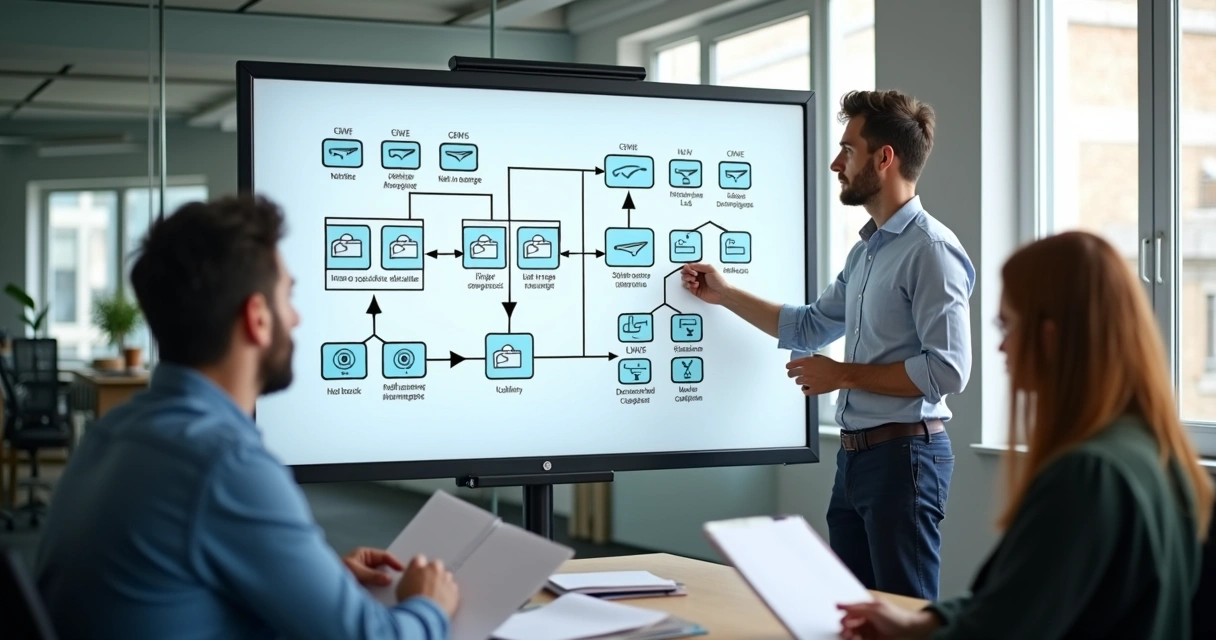
From planning to deployment: The development lifecycle
In every engagement, I treat the entire build process as a partnership. Here is a high-level view of how I guide clients from the first idea to a live, scalable product:
- Discovery and project planning We define business goals, gather requirements, and plan architecture that balances speed, scalability, and security.
- UX/UI design Good design is more than color. I wireframe flows, align branding, and refine usability—directly in sync with backend development.
- Development and testing Core features, integrations, and security layers are built stage by stage, with tight sprints and constant feedback.
- Cloud and DevOps integration I deploy all major builds with modern CI/CD pipelines, automated tests, and rollback safety nets. AWS, Google Cloud, and others are part of my toolkit.
- Launch and support A smooth production release—the beginning, not the end. I offer monitoring, updates, and quick response to scaling or security needs.
This approach isn’t theoretical. For a step-by-step guide, I recommend reading my insights on building modern scalable web apps with Laravel—where I include many of the best practices used by top teams.
Modern tools, integrations, and community support
One strength of Laravel is its ever-growing set of modern tools and integrations. Some of my favorites that amplify projects:
- Laravel Nova, Filament, and TALL stack for admin panels and dashboards
- Passport and Sanctum for robust API authentication
- Real-time interaction with Laravel Echo and WebSockets
- Comprehensive testing (unit, feature, end-to-end)
The active developer community means that new packages and updates appear constantly, and issues get solved fast. No need to wait for slow corporate cycles—your app stays ahead.

Cost-effectiveness and transparency in Laravel projects
Clients ask me all the time—how does Laravel compare on price and maintainability?
Here are a few practical benefits I consistently deliver:
- No expensive licensing: Laravel is open-source, free-of-cost, and never locks you into a paid model.
- Your investment goes into features and quality—not into simply keeping the engine running.
- Maintenance is straightforward, with clear upgrades and documentation.
- My freelance model means you get senior expertise without the overhead of an agency.
When compared to competitors who may charge by seat or for every module, or rely on hard-to-modify legacy code, I keep things transparent and upfront. You'll never be surprised by unexpected fees.
My edge over other Laravel developers and agencies
I know there are many companies and solo devs out there promising Laravel expertise. Some have tidy portfolios and clever websites. But here's why my clients trust me more:
- Wide stack expertise—PHP, JavaScript, and the cloud, fully integrated
- Real business consulting, not just code delivery
- 16+ years in production environments (not just school projects)
- Global perspective as a digital nomad—adapting to markets worldwide
- Personal accountability—clients deal with me directly, never handed off to junior staff
When you want custom-built, scalable web apps, I offer the most direct path to results, from strategic planning to ongoing growth support.
Whether you need just one skilled Laravel developer, or a consulting partner with insight into custom apps, integration, and scaling, I offer solutions tailored to you—not a boxed template.
Advantages of choosing Laravel from my perspective
- Rapid development: Quickly build proof-of-concept and MVPs, then evolve.
- Strong ecosystem: Packages, documentation, and active peer support mean faster issue resolution.
- Long-term maintainability: Clear code structure, automated testing, easy upgrades.
- Built-in security: Defaults that protect against most common threats.
- Cloud ready: Works with any infrastructure—AWS, GCP, Azure—out of the box.
- Modern architecture: Ready for microservices, APIs, and modern frontends.
For a deeper read on these advantages, my recommended guide is Laravel development services for scalable custom solutions, which unpacks how I bring all these tools together for actual, growing businesses.
Conclusion: Why work with me for your next Laravel project?
You’re probably reading this because you’re ready to take an idea further or you’re facing scaling pains in your current system. As someone who’s helped dozens of founders, CTOs, and product managers reach their goals with Laravel, I believe in hands-on, personalized guidance. I don’t do cookie-cutter apps—I build solutions that grow with you and guard your users’ trust.
If you want to skip the template route and get your project moving with senior-level expertise, contact me today or learn more across my resources—I’m ready to help you build what’s next.
Frequently asked questions
What are Laravel development services?
Laravel development services refer to a suite of offerings ranging from custom web app builds, API integration, and microservices engineering to consulting on architecture, deployment, and ongoing support. These services help businesses create, scale, and secure applications tailored exactly to their operational needs. I use a combination of Laravel features, cloud tools, and industry best practices for each unique client.
How much does Laravel development cost?
Pricing depends on project complexity, features, integrations, and ongoing maintenance needs. Custom Laravel solutions can range from small MVPs in the low thousands to complex enterprise platforms at higher budgets. As a freelancer, I keep costs competitive by focusing only on what you need, with transparent estimates and breakdowns.
Is Laravel good for scalable apps?
Laravel’s architecture is designed for easy scaling, supporting everything from single-server setups to enterprise-grade cloud clusters. Its support for caching, queues, load balancing, and microservices means that scaling your application can be controlled and predictable—without rewriting major parts of the codebase.
Where can I find top Laravel developers?
You can hire talent through freelancer networks or agencies, but a proven track record and portfolio matter most. I offer direct collaboration, with 16+ years of multi-sector experience and a focus on full-stack and AI-driven projects. If you value personal attention and deep technical skills over generic agency models, working with me brings those advantages.
How secure are Laravel-based applications?
Laravel provides secure defaults, including protection against common threats like CSRF, SQL injection, and XSS out of the box. I enhance this with code audits, custom security layers, strong authentication, and regular updates. When combined with industry best practices, Laravel-based applications deliver the kind of security modern businesses demand.