
In my 16 years of real-world experience as a Senior Software Engineer and digital nomad, I’ve seen business needs and digital strategies evolve at breakneck speed. Applications that fit like a glove are now non-negotiable—nobody accepts off-the-shelf limitations anymore. Custom Laravel development stands out as the backbone of my work, letting me build applications that are fast, secure, adapts smoothly as your business grows, and stay robust for years to come. If you’re looking for results that actually move the needle for your company, you’re in the right place.
Why choose custom Laravel development for your business needs?
When I first started seeking the best tools for scalable and secure backend solutions, Laravel’s flexibility and modern PHP architecture instantly set it apart. Over time, I noticed a few things about why smart companies look for tailored Laravel solutions over generic alternatives:
- Rapid development: Laravel’s expressive syntax and built-in tools cut development time and surprise bugs.
- Easy scaling: Adding features, handling more traffic, or moving to the cloud—all manageable with less friction.
- Proven security: Modern libraries and regular updates mean vulnerabilities get patched promptly, as highlighted in NVD’s documentation on Laravel security.
- Wide support: An active community and frequent upgrades keep your application ready for new business demands.
- Integration power: From APIs to microservices and AI capabilities, Laravel connects seamlessly with the digital tools your business already uses.
In my experience, working with clients from startups to enterprises, custom Laravel development always delivers best when the solution fits the client’s unique processes and long-term growth vision.
Custom fits always outperform one-size-fits-all.
Understanding the project lifecycle: From idea to impact
Every successful Laravel project I deliver runs through a disciplined lifecycle. I don’t believe in shortcuts when reliability and growth are priorities. Here’s how I bring ideas to life:
Discovery and requirements
The process always starts with a detailed conversation. I work closely with you to define what success means, gather your requirements, and dig into your business logic. This phase tackles questions like:
- What problem are we solving?
- Who are your users?
- What integrations or data flows are needed?
- Do legacy systems or migration challenges exist?
These talks lay the foundation for everything that follows. I believe listening is my strongest tool here.
Wireframes and architecture
Next, I translate what I’ve learned into visual wireframes and technical diagrams. I map the application’s modules, data structures, and workflows. At this point, I make key decisions about:
- Database structure: Optimized for speed and future scaling.
- User journey: Streamlined flows suited to real customer habits.
- System integration: How your existing tools, APIs, or third-parties talk to Laravel.
- Security planning: Authentication, permissions, and data protection.
Getting this phase right avoids slow-downs later—something my clients always appreciate.
Agile development and frequent demos
Once the framework’s in place, I switch to building the actual application. I break down features into iterative sprints. After each phase, I give you working demos—not just screenshots. This feedback loop means the unexpected is caught early.
Testing: Beyond the basics
Long before launch, I insist on rigorous testing. Unit, integration, and functional tests confirm every feature works as promised. I include security checks for:
- Common vulnerabilities: CSRF, XSS, SQL injection.
- Known Laravel-specific risks, such as those detailed in NVD’s advisory on XSS bugs in Laravel.
- Business logic errors that might allow privilege escalation or data leaks.
During this phase, I often use code review tools and static analysis to guarantee maintainability and prevent regressions.
 DevOps, deployment and monitoring
Deploying a production system takes more than copying files to a server. I automate deployments using best-in-class CI/CD pipelines, which:
- Minimize human errors and cut downtime during updates.
- Enable quick, safe rollbacks if issues arise.
- Set up robust monitoring and alerts for speed, usage, and health.
Post-launch support and continuous improvement
My commitment doesn’t end at go-live. I schedule regular code reviews, performance upgrades, and pro-active maintenance—aiming not just to patch issues, but to help you move faster as your business grows. This means delivering a system that remains:
- Fast enough as your user base increases.
- Flexible enough to handle new features, cloud services, or AI modules.
- Protected against new security threats—especially as shown in ongoing vulnerabilities tracked at NVD for Laravel.
I want my clients to know their investment stays safe—and continues to generate value for the long haul.
Laravel as the backbone: Building for scale and change
Whenever I’m designing a new digital tool or upgrading an existing system, Laravel lets me focus on your business rules rather than technical limitations. I’ll share what makes it such a sound choice:
Powerful MVC structure
Laravel’s Model-View-Controller pattern keeps your business logic separate from the interface and database code. This results in cleaner code that’s easier to adapt even years later. It also means you can onboard new developers faster and avoid costly rewrites.
Modern security features are built-in
With recurring threats like reflected XSS and session hijacking making headlines, frameworks need bulletproof foundations. Laravel brings built-in shields:
- Automatic CSRF protection on all forms and routes.
- Out-of-the-box input sanitization and output escaping, as required to address vulnerabilities like the improper route encoding in Laravel.
- Password hashing using strong, up-to-date algorithms.
- Flexible authentication and role-based access control.
- Encryption and secure session management, complying with data privacy regulations.
Ready for scaling
As your user base or traffic grows, so must your infrastructure. Here’s what I like in Laravel for scaling up:
- Queue systems and scheduled jobs for background work, so user actions stay fast.
- Database migrations and seeders that drive version control in your data.
- Caching support (Redis, Memcached) to keep response time snappy.
- Stateless API development for mobile apps or frontend JavaScript frameworks.
- Seamless deployment to AWS, Google Cloud or your provider of choice.
This lets me future-proof your investment—whether it’s a B2B SaaS platform, consumer app, or custom AI module.
API creation, web apps, cloud, and migration: The uses for custom Laravel development
In my daily work, I see different companies come with very different digital puzzles. Laravel fits them all—if you know how to design for the real-world challenges behind each use case.
API development
Business applications don’t work in silos anymore. If your app needs to talk with mobile frontends, third-party services, or even legacy platforms—Laravel’s API resources and routing handle the job. RESTful endpoints, standards for authentication (OAuth2/JWT), and schema validation are all supported.
Robust web apps
From dashboards with real-time metrics to multi-tenant SaaS systems, Laravel drives the backend with clean, modern code. Features like Eloquent ORM, Blade templating (with patched security for issues like Blade’s previous hash vulnerability), and middleware make it easier for me to deliver quality web experiences.
Cloud integration
Businesses who want resilience and always-on accessibility often turn to cloud deployments. Laravel plugs into popular providers with package support for serverless functions, real-time notifications, object storage, and more.
Modernizing legacy systems
Many times, a business comes to me with an ancient, monolithic app that is expensive to fix and impossible to scale. Laravel is perfect for migrating legacy logic into a maintainable, future-proof structure. Data mapping, phased launches, and API adapters help smooth the transition.
Rebuilding on Laravel can breathe new life into your legacy software.
 How I deliver secure custom Laravel solutions
No application is better than its weakest security link. I approach every project with defense in mind, keeping up with recent vulnerabilities like the ones documented by NVD’s reports on Laravel. Here’s how I handle this in my work:
Proactive security reviews
Before a single feature reaches your users, I audit the code for best practices:
- Validating input rigorously on both frontend and backend.
- Escaping output everywhere, especially places where user data is shown—important for issues similar to the 2020 Laravel data-handling risk.
- Locking down authentication with rate-limiting, multi-factor authentication, and secure roles.
- Encrypting sensitive data at rest and in transit.
- Staying current with upstream patches, especially for vulnerabilities like CVE-2024-52301, which requires updates to maintain PHP environment security.
Continuous monitoring and update discipline
Threats don’t stand still. I implement real-time monitoring for suspicious patterns and automate dependency updates, closing gaps on newly published exploits.
Incident response and backup strategy
While prevention is my priority, I put fast rollback and recovery plans in place. This means regular database backups, clear audit logs, and quick action playbooks to deal with anything unforeseen.
Educating your team
I always offer guidance for your internal team, so security practices stick and shadow IT doesn’t lead to new holes.
 What sets a great Laravel partner apart?
As someone who’s seen countless outsourcing stories—both good and bad—I understand what matters most when choosing someone for this journey:
- Transparent communication: Expect weekly updates, not hidden labor.
- Hands-on technical leadership: Look for a development process guided by experience, not generic playbooks.
- Long-term thinking: Will the partner commit to post-launch improvements, or vanish after delivery?
- Portfolio diversity: Real results for different clients signal adaptability.
- Tailored proposals: The best don’t just repeat from a template. They ask questions, dig deep into YOUR needs, and build from there.
Some companies in this space may seem similar. But from my perspective, it is the extra layer of care—deep discovery, code maintainability, and ongoing optimization—that distinguishes my work in Laravel.
If you want to see what this approach looks like in action, you can learn more about my custom Laravel development services which break down my process and values in detail.
Best practices for maintainable and scalable Laravel code
Sustainable digital products depend on the technical foundation laid during the first lines of code. My approach to Laravel development has been shaped by solving problems for businesses in highly regulated, fast-changing sectors. Here are the patterns that keep code flexible, readable, and ready for change:
- Use Eloquent ORM for clean, readable data queries. Avoid raw SQL unless dealing with very complex performance needs.
- Rely on service classes and repositories to organize business logic, separating concerns for easier updates later.
- Leverage Laravel events and listeners for decoupling operations (notifications, logs, background jobs) without cluttering core logic.
- Keep Blade views simple, offloading logic to controllers or service providers—critical for security and testability.
- Adopt modern composer-based dependency management and ensure frequent updates to avoid deprecated code, as with patches noted by NVD for Blade template risks.
- Automate testing at multiple levels: unit, feature, and end-to-end tests as part of your continuous integration workflow.
- Use environment-based configuration, never hard-coding sensitive values in scripts.
These steps create systems that stand up as traffic grows and as new business features are layered in.
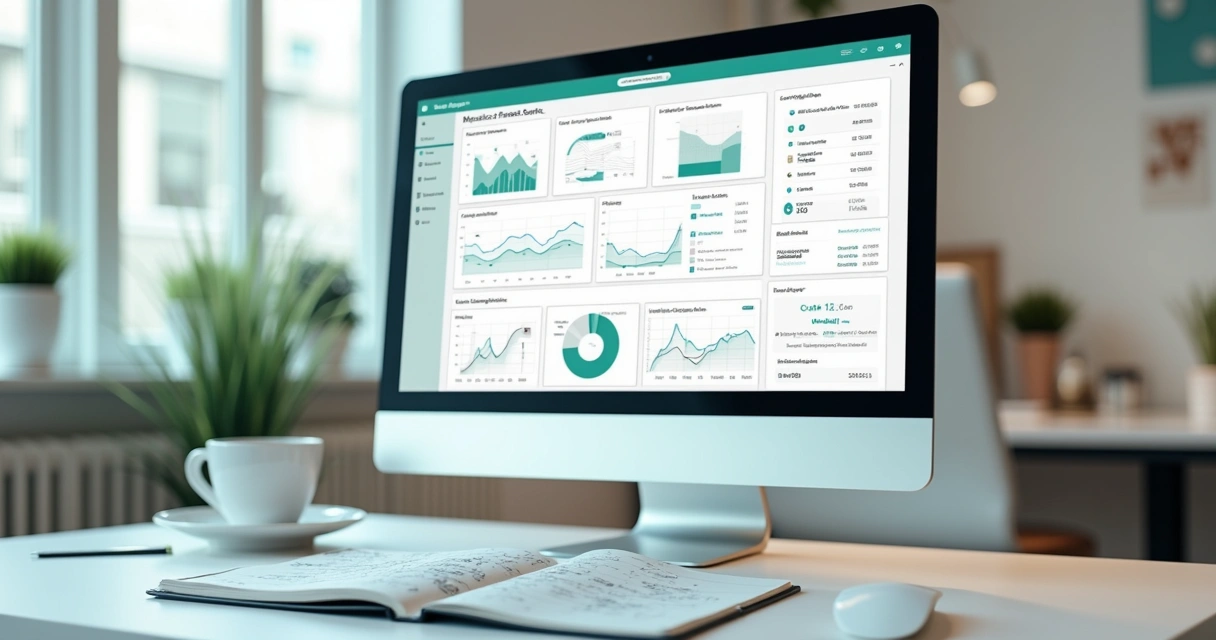
Case study: Creating a scalable analytics dashboard for a SaaS startup
To illustrate problem-solving, I’ll share a real-world case where a SaaS company needed to modernize their analytics dashboard—shifting from a sluggish, single-server app to a multi-tenant platform handling large datasets and live insights.
The challenge
The client’s legacy PHP app buckled under growth. Data latency and poor code structure stalled updates. They required:
- Multi-tenant separation (different clients, different data silos).
- Real-time metrics with fast dashboard loading.
- Secure user authentication by client and by role.
- Cloud deployment on AWS with automated scaling.
My solution, step by step
I started with in-depth requirements and process mapping. Then, I designed the application using Laravel’s tenancy packages, the Eloquent ORM, and Laravel Queues for background processing. Some key decisions:
- Used migrations and seeds to provision new client environments easily.
- Built APIs for external integrations and internal frontends, using Passport for OAuth2 auth.
- Connected to AWS S3 for data storage, and AWS Lambda for heavy report generation jobs.
- Wrote custom middleware for tenant isolation and fine-grained permission enforcement.
- Set up local caching, Redis, and CloudFront for performance tuning.
The result? Dashboard loads dropped from 3 seconds to under 600 milliseconds—even as the client base doubled. Security audits found no privilege escalation paths, and new features were added with minimal refactoring thanks to clear modularization.
Modern Laravel builds unlock growth you thought was impossible.
 How I support migration, legacy refactoring, and AI integration
Not every project starts clean. Many businesses are locked into old databases, unmaintainable code, or tools that simply don’t communicate. I help clients rebuild step-by-step—transforming legacy systems or introducing AI without breaking current processes.
Migrating old systems
This is where attention to detail is key. I inspect old schemas, map data to new models, build wrappers or adapters, and roll out improvements in manageable waves. This way, downtime is minimal and business continuity is preserved. For large updates, I recommend iterative cutovers and thorough QA to avoid introducing hard-to-find bugs.
Refactoring for maintainability
Often, applications get tangled with “spaghetti code” as they grow. I’ve helped teams untangle these knots—breaking monoliths into clear Laravel modules, shifting to proper REST APIs, and updating dependencies to avoid vulnerabilities like those discussed in the mishandling of $guarded property in old Laravel versions.
Integrating AI and advanced modules
Many companies today want AI-driven features—from chatbots to data enrichment. Laravel serves as an excellent foundation due to its API skills and modular structure. I’ve worked with clients integrating OpenAI APIs, training custom models, and connecting external AI tools into their platform—always with a focus on response time and user privacy.
Maintenance, performance, and continuous updates
The job doesn’t end with launch. If your platform can’t withstand new usage patterns, or keep up with emerging threats, your investment loses value fast. I approach ongoing support as a continuous process.
- Proactive monitoring of server health, slow queries, and error rates highlights performance gaps before customers feel them.
- Regular patching of Laravel and dependencies addresses vulnerabilities the moment updates are published.
- Structured post-launch reviews ensure every new feature meets functional and security needs.
- I keep an open ear for client feedback, rapidly deploying minor fixes or tweaks as new business goals appear.
This ongoing focus on speed, availability and resilience ensures your Laravel application is never yesterday’s technology. And clients tell me this peace of mind is among the greatest benefits of a partnership.
How my services differ from typical Laravel development agencies
You’ll find many agencies and outsourcing shops offering Laravel services. Here’s where my solo approach—shaped by years in both freelance and in-house roles—sets me apart:
- Direct access: You work with me, not a chain of account managers and juniors. I hear your priorities firsthand and adjust fast.
- Cross-technology flexibility: If you want advanced AI, scalable DevOps, or a smooth cloud migration, my background is far broader than the basic PHP developer profile.
- Custom project fit: I propose solutions after studying YOUR workflows and pinch points, not pushing pre-made packages or licensing traps.
- Transparent processes: Clear estimates, weekly progress snapshots, detailed documentation, and zero surprises.
- Ongoing partnership: My commitment extends beyond code delivery, including post-launch support, performance reviews and scaling advice.
For a closer comparison with typical alternatives, my Laravel solutions overview summarizes the distinct value clients receive when choosing a freelancer with broad system experience.
Best practices in DevOps, testing, and deployment
Long-term performance and robustness all come down to systematic, automated processes. In my workflow, DevOps isn’t an afterthought, but a core part of the stack. Here’s what I build into every Laravel project:
- Automated code linting and style checks with every commit.
- Continuous integration (CI) pipelines that run full test suites before merging any changes.
- Deployment setups using tools like GitHub Actions, Bitbucket Pipelines, or AWS CodeDeploy—all configured to allow rapid, safe rollbacks.
- Centralized logging with remote alerts for errors, failed logins, or unusual usage patterns.
- Automated backup workflows, ensuring data loss is never a real risk.
- Monitoring infrastructure (Datadog, New Relic, or open source equivalents) to track performance and capacity.
Because reliability is built over time—not tacked on at the end.
Tailored Laravel solutions: When and why to go the custom route
Many clients ask: “Should I choose custom Laravel development, or save budget with an off-the-shelf solution?” Here’s how I help them decide:
- Do your workflows or integrations differ significantly from your competitors?
- Is rapid growth (users, features, markets) a realistic goal over the next year?
- Will you need to adapt to new technologies (cloud, AI, new regulations) fast?
- Are security or uptime non-negotiable?
If you answer yes to most, building on Laravel with a custom approach is likely “budget insurance” rather than a luxury. The investment pays back via lower support costs, ease of upgrades, smooth scaling, and avoided compliance headaches.
For those seeking an example of how I adapt Laravel for unique business cases, see my tailored Laravel web app and integration services page, which walks through custom feature rollouts for actual clients.
Are popular Laravel agencies a real alternative?
There are many agencies positioning themselves as alternative Laravel partners. I’ve worked alongside and even inside a few. While they may boast bigger teams, I often notice the following limitations:
- Standard “assembly line” solutions. Less focus on truly understanding unique business models.
- Slow turnarounds when feedback requires a chain of command to reach the developers doing the work.
- Upselling of unneeded features or proprietary license models.
- Lack of flexibility in customizing DevOps pipelines, security reviews, or advanced features like AI.
What clients want most—so I’ve learned—are ownership, clarity, and solutions specific to their business. My custom Laravel work lets you move faster and with peace of mind, as supported on my scalable Laravel software solutions overview.
Long-term partnership: Continuous success with custom Laravel development
The value of custom Laravel solutions extends far beyond launch day. As market needs evolve, security threats change, and performance pulls at your user experience, the real gains are found through an ongoing relationship. I keep the partnership going by:
- Running periodic reviews and health checks before problems escalate.
- Adding features or integrations as your clients demand new functions.
- Staying ahead of framework and infrastructure updates to keep things smooth and safe.
- Training and guiding your staff so best practices continue internally.
For a sense of what this support can look like, the custom Laravel company details page offers insight into real maintenance, monitoring, and support approaches.
Why work with Adriano Junior for your next Laravel project?
To sum it up, my work in Laravel isn’t just technical—it's personal. I believe your application should outlast trends, adapt without drama, and always put your business ahead. Whether you are modernizing, integrating new APIs, or scaling under heavy demand,
Custom Laravel development, handled by someone who cares, means your software grows as you do.
If you want your digital projects to move faster, stay secure, and scale with confidence, I invite you to get in touch. Let’s talk about your needs, and see how I can help. Your success starts with the right foundation—and with a partner who invests in your outcomes.
Frequently asked questions
What is custom Laravel development?
Custom Laravel development is the process of building web applications, APIs, and digital tools tailored to your business processes, using the Laravel framework’s features to ensure flexibility, security, and performance. Instead of forcing your needs into pre-built packages, this approach creates solutions that fit you—and that adapt smoothly as your business grows.
How to choose a Laravel development company?
When selecting a Laravel development company or professional, look for proven technical experience, real-world portfolio variety, direct communication, disciplined processes, and a willingness to commit beyond the first launch. Comparison with big agencies often reveals a more attentive, custom fit with a seasoned freelancer like myself, where rapid response and long-term partnership come standard.
Is custom Laravel development secure?
Custom Laravel development can be highly secure when best practices are followed: regular code reviews, tight input validation, up-to-date patches, strong authentication, and proper server configuration. Security advisories such as those from NVD point out the risks if updates are neglected, but ongoing care and diligence keep your application protected from the latest vulnerabilities.
How much does Laravel development cost?
Costs vary with project complexity, integration needs, and support models. At its core, a tailored Laravel solution usually costs more upfront than a template, but delivers greater business value by reducing future maintenance and unlocking faster growth. Pricing is transparent and scoped to how much customization, migration, or AI integration you require.
Where to find expert Laravel developers?
Aside from scanning large directories, the best results come from engaging a professional with a portfolio of real-world projects, strong references, and a consultative approach. As you search for a true custom Laravel development company, look for those who prioritize your business goals and have the technical versatility to support you long-term—qualities I strive to embody in all my work.