When organizations or startups seek digital transformation, their top priority is often seamless technology. From my years of experience as a Senior Software Engineer, I've seen this first-hand—choosing the right developer can decide whether a project thrives or falls behind. If you’re exploring how to hire or partner with a reliable Laravel web developer, or wondering what sets best-in-class services apart, this guide is for you.
Understanding the Laravel advantage
I have worked with many PHP frameworks over the past 16 years. Some clients ask, “Why should I choose Laravel instead of Symfony or CodeIgniter?” For most, the answer is both practical and strategic. Laravel offers rapid development, powerful built-in packages, and an ecosystem that makes everything from authentication to testing easier. It’s beloved for its clarity and maintainability, qualities critical for scalable, long-lasting digital products.
Laravel accelerates development without sacrificing quality.
For those looking for a versatile platform to create robust applications, Laravel often becomes the natural choice. The framework follows modern architecture patterns and helps teams manage complexity. In every project I take on, I prioritize stability and scaling, and Laravel matches this philosophy perfectly.
Core responsibilities of a Laravel developer
Clients sometimes wonder what it means when I say I am a Laravel expert. The role goes much deeper than coding – it’s about designing maintainable systems, making architecture decisions, and ensuring security at every layer. Here's what I see as core responsibilities:
- PHP mastery: Knowing PHP is non-negotiable. Laravel is built on it, and anyone aiming for top results must understand advanced PHP topics, like closures, dependency injection, and namespaces.
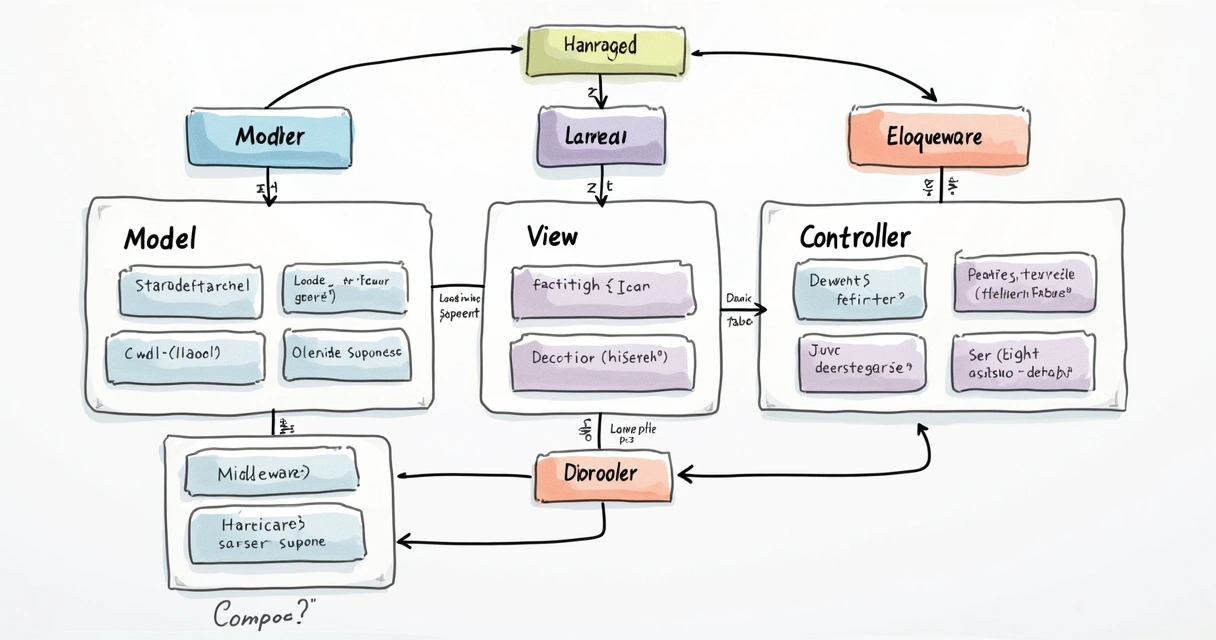
- MVC architecture: Laravel uses the Model-View-Controller pattern. This means organizing logic in predictable ways, separating concerns, and making code more adaptable.
- Modern security standards: Every application is a potential target, so I personally use Laravel’s built-in defense mechanisms—CSRF protection, SQL injection guards, and secure authentication.
- System scalability: My job is not just to write code that works now, but that adapts easily to future features or increased user demand.
Distilling the job to its essence, a high-level Laravel backend specialist needs technical insight, a security mindset, and commitment to best practices that stand up in audits and real-world use.

The skills that set professionals apart
Clients who come to me through custom Laravel development services usually want one thing: expertise they can trust. Skills are measurable, and the best developers never stop learning and adapting. Here’s what I consider must-have skills for top-tier Laravel professionals:
- API development and integration: RESTful APIs are the bridge between systems. I design APIs that are intuitive, documented, and adaptable to third-party tools.
- Database design: Using Laravel’s Eloquent ORM, I structure data for both relational MySQL and scalable NoSQL setups when needed.
- Frontend with Blade templating: Blade offers dynamic, reusable HTML components. I blend it with JavaScript frameworks for interactive applications, choosing tools based on project needs.
- Automation and task scheduling: Rather than relying on manual triggers, I use Laravel’s scheduler to handle automated emails, report generation, and more.
- Version control and deployment pipelines: Every project I deliver is managed in Git from day one, with CI/CD pipelines for streamlined launches and updates.
- Automated testing: Following industry priorities reflected by Statista’s survey of in-demand tech skills, I build extensive unit and integration tests, ensuring features stay reliable through updates.
- Cloud platforms: Services like AWS (Amazon Web Services) are standard in my workflow. I use managed hosting, storage, and serverless functions to support both startups and enterprise-grade systems.
What separates an expert from a generalist isn’t just knowing these tools, but using them together to provide real value. My clients, especially those needing staff augmentation or remote development, rely on cohesive skills like these to keep projects on track.
Daily workflow and best practices
A new client recently asked, “What does your day look like when you’re building our application?” I always reply—each day combines planning and precise execution:
- Morning status review: I check version control updates, recent automated test runs, and error logs from production.
- Code review and merge requests to ensure standards and security checks are flawless, using frameworks Laravel supports.
- Sprint planning: I break down features into manageable tasks, logging everything in agile project management systems. My clients see progress through regular demos.
- Automated deployment: When a new feature is ready, CI/CD takes care of building, testing, and launching updates.
- Documentation update: I keep both internal docblocks and user-facing documentation current, helping clients and future developers.
Adopting these workflows ensures your Laravel project remains maintainable, reduces onboarding time for new team members, and wards off “technical debt”—unplanned costs that add up when you skip best practices.
Understanding the Laravel ecosystem
Laravel’s vast ecosystem is a treasure chest for developers and clients looking for speed and reliability. Some clients ask me what comes in the box, and why it matters. Here’s what sets Laravel apart for me and my customers:
- Eloquent ORM: My go-to for mapping database tables to PHP objects. It streamlines CRUD processes, and migration features mean updates are quick and less error-prone.
- Blade templating: This is not just about visual appeal. Blade speeds up development, lets me reuse layouts, and keeps things DRY (Don’t Repeat Yourself).
- Laravel Mix: Web asset compilation made simple—combining and minifying JavaScript and CSS without a labyrinth of modules.
- Package manager (Composer): Integrates third-party packages effortlessly, which is fantastic when projects scale.
- Automated testing: Built-in support to write tests in PHPUnit or Pest. This keeps releases reliable as features expand.
- Task scheduling with Laravel Scheduler: Automates repetitive jobs, from email notifications to syncing with external APIs.
This ecosystem reduces time-to-market and protects client investments—qualities that set me apart when offering solutions for both startups and large enterprises. To understand more about the depth of Laravel’s ecosystem, I recommend looking into the Laravel solution development guide I have written.
Comparing Laravel to other frameworks
Developers and clients sometimes debate between Laravel, Symfony, and Node.js-based solutions. They each have their merits, but from experience, Laravel stands out for rapid prototyping, community support, and future-proofing business investments.
Symfony offers advanced customization, but that often leads to longer timelines and increased complexity for features that, in Laravel, are already covered by first-party packages. Node.js environments like Express can deliver performance for real-time needs, but require building many features from the ground up. Laravel, on the other hand, accelerates project launch while keeping quality high.
What clients appreciate is being able to hire a professional who is not only experienced in Laravel, but also fluent in multiple stacks when needed. This is another reason I am able to deliver modern scalable software with Laravel that also integrates seamlessly with AI solutions and cloud infrastructure. Versatility and foresight are key qualities—qualities I constantly cultivate.
The importance of automation, testing, and version control
For any client investing real money and time, code reliability is not just a feature—it’s a promise. Automation, comprehensive tests, and strict version control keep that promise intact. Drawing from industry data on the global demand for IT testing skills, businesses now expect continuous delivery, not just periodic releases.
- Continuous Integration/Continuous Delivery (CI/CD): I always set up automated build and deployment for my clients. This reduces downtime and the risks often tied to manual launches.
- Automated tests: By using Laravel’s robust testing toolkit, I deliver code that checks itself—preventing bug regressions and catching integration issues before they go live.
- Git version control: Every file is tracked, every change documented. Clients always have the full history—no guesswork or "it worked on my machine" surprises.
If you want to experience hands-off reliability and never worry about breaking the production site again, this is the approach that delivers peace of mind.
Typical career paths and emerging roles
The market for advanced Laravel and PHP talent is thriving, following the global shift to cloud platforms, API-driven software, and even AI-powered services. In my professional journey, I’ve noticed a sharp increase in clients valuing remote-first, staff-augmented teams. Companies are no longer limiting themselves to local talent. They want experience, flexibility, and results.
Let’s review some career trajectories for developers focusing on modern web frameworks:
- Backend specialist: Deep PHP and architecture expertise. Manages server-side logic, ER modeling, and API design.
- Full-stack developer: Combines Laravel expertise with front-end frameworks like Vue.js, React, or Angular.
- DevOps and cloud engineer: Set up automated deployments, optimize containerization with Docker, and monitor production observability.
- Technical lead/consultant: Advises on long-term decisions, oversees code reviews, and mentors junior developers—roles I often fill for clients scaling their teams.
- Integration with AI: Many projects I tackle involve AI or machine learning modules that integrate easily with Laravel’s API-first approach.
Remote-first talent is now the rule, not the exception.
This change is reflected in my services, as I specialize in quickly augmenting remote or hybrid teams anywhere in the world. If you want more information on hiring advanced web skills, you should review how to hire a Laravel developer with advanced web skills.
Current salary trends and earning potential
Salary is always a practical concern, both for clients negotiating contracts and for developers planning their careers. According to recent research from Statista, niche backend and infrastructure specialists consistently reach higher pay tiers. In fact, developers in specialized languages like Scala and Clojure surpassed $100,000 median annual compensation. For Laravel, location and experience play a big role:
- Freelancers and consultants: Rates start around $40-$80/hour for strong mid-level profiles. For senior Laravel architects like myself, project-based agreements or retainer models can reach $120/hour or more, reflecting both skillset and years of cross-domain experience.
- Full-time contracts: In leading tech markets, experienced Laravel professionals can expect $80,000–$120,000/year, with extra for roles blending DevOps or AI integrations.
- Remote and staff augmentation positions: Many clients now offer premium rates to attract global talent, with bonuses for seniority and broad architectural skills.
My clients recognize that hiring expertise is not just an expense, but a strategic investment—the right developer accelerates delivery and avoids costly mistakes. I’ve personally turned failing projects around for clients who previously looked only at the lowest rate, regretting it later when deadlines slipped.

Practical hiring tips for clients and digital nomads
Many organizations, especially those embracing remote work, wonder how to identify the right Laravel developer. I always suggest starting with clarity and transparency in job specs, and then focusing on more than just keywords on a resume:
- Project portfolio: Ask for detailed case studies. When I present my work, clients see real-world problem-solving, not just buzzwords or unfinished side projects.
- Soft skills: Communication is essential—remote teams need structured feedback loops and reliable updates.
- Ownership and initiative: The best freelancers and senior engineers don’t need micromanaging. I keep clients informed and predict what needs to be solved next.
- Testing practices: Ask candidates to explain their approach to testing and security. It’s easy to skip this, but as I repeat to my clients, if your developer can’t talk in detail about their testing philosophy, look elsewhere.
- Adaptability: The market shifts quickly. I stay current with new releases, community packages, and best-in-class tools to keep your application miles ahead of competitors.
If you need remote or staff augmentation talent that adapts quickly and plugs right into your workflow, custom apps and integration services are the best next step.
Building skills and planning a learning path
For developers aiming to reach the senior level, and for clients wanting a confident, future-proof hire, I’ve mapped out skill-building strategies that work:
- Start with PHP fundamentals: Deep PHP knowledge underpins good Laravel development.
- Master MVC and routing: Build at least three full-featured CRUD apps—from user authentication to payments.
- Learn Eloquent and migrations: Practice data modeling and see how migrations help version your database schema.
- Get strong with testing: Write automated tests early and often. Unit, feature, and browser tests should all become second nature.
- Understand deployment and cloud hosting: Learn how to configure servers, use managed hosts, and set up SSL, backups, and scaling rules.
- Contribute to open source or join communities: Not only does this build your reputation, but it exposes you to cutting-edge ideas and collaborators.
My personal journey to a senior role was never linear—each project, each client, each problem added to the expertise that now lets me build robust digital products. If this sounds like the developer you want on your next project, don’t hesitate to reach out.
Trends shaping the future of Laravel development
Some trends are impossible to ignore. In my work as both a freelancer and as a digital nomad, I notice:
- Staff augmentation and distributed teams: More clients now expect remote-first delivery and seamless onboarding of external pros like myself.
- Cloud-native architectures: Deployments to AWS, Azure, or Google Cloud are now standard operating procedure.
- AI and API integrations: Every month, I receive more requests for Laravel applications linking up with AI models, chatbots, or external APIs to add intelligence or automation.
- Continuous learning: According to current surveys, artificial intelligence, machine learning, and API design are in-demand learning goals for both new and experienced developers.
- Security-first design: With data privacy concerns at an all-time high, my clients need assurance that their user data is safe and their business protected.
I shape my services to match these priorities, so customers receive not just technical labor, but forward-thinking solutions that match today’s market realities.
Conclusion: Why choose Adriano Junior for your Laravel projects?
Across hundreds of engagements, I have seen how strategic partnerships (not just transactions) lead to outstanding results in web development. What sets me apart as a Laravel expert isn’t just the years of technical experience, but my commitment to client outcomes, security, and lasting value. As a digital nomad and senior engineer, I deliver results quickly, communicate with clarity, and stay aligned with your business goals every step of the way.
Your project deserves a partner, not just a coder.
If you want to work with someone who builds modern, scalable, and future-ready Laravel applications, visit my modern Laravel software solutions or explore my custom development services to see how your vision can become a reality. Let’s connect, and together, we will make your application stand out.
Frequently asked questions
What does a Laravel web developer do?
A Laravel web developer designs, builds, and maintains web applications using the Laravel PHP framework. Their work includes coding backend logic, setting up databases, integrating APIs, implementing authentication, performing security checks, and ensuring that everything runs smoothly and scales well as the business grows. They also routinely write tests, automate repetitive tasks, and document their work for future support and upgrades.
How do I become a Laravel developer?
To become a Laravel specialist, start by learning PHP and web basics, then progress to Laravel’s Model-View-Controller pattern, Eloquent ORM, Blade templating, and toolset. Build full-featured sample projects, read Laravel's documentation, join communities, and experiment with features like authentication, migrations, and automated testing. Collaborating on open-source or freelance projects can help you gain real-world expertise.
What skills are needed for Laravel jobs?
In my experience, the most valuable skills for Laravel roles are PHP proficiency, understanding of MVC, RESTful API design, solid knowledge of database modeling, and the ability to write automated tests. Familiarity with version control (like Git), command-line tools, cloud platforms, and JavaScript for interactive features is also important. Strong communication and a habit of documenting logic help teams move faster and avoid confusion.
Is Laravel development a good career?
Yes, Laravel development remains a strong career field, especially as businesses need scalable, secure web platforms and value the rapid results that Laravel can provide. The framework's popularity, supportive ecosystem, and frequent use in startups and enterprise projects mean that skilled developers are often in high demand worldwide. Remote-first work and staff augmentation trends also open many doors for freelancers and digital nomads.
Where can I learn Laravel online?
You can learn Laravel through official documentation, community tutorials, platforms like Laracasts, and by building real-world projects. Many developers join online forums and local meetup groups to get feedback, ask questions, and stay up to date. Reading my step-by-step Laravel development guide can also give you actionable tips and industry insights.