
Building a secure, high-performing web application is a challenge for any business, from startups to established enterprises. As someone who has spent over sixteen years designing, developing, and launching digital products worldwide, I’ve seen firsthand how much the right technical partner can improve your journey and outcomes. Selecting a Laravel development agency—or a freelancer with deep Laravel expertise—can set the tone for project speed, long-term flexibility, budget, and peace of mind.
But how do you separate those who simply deliver features from those who truly care about your business goals? How do you know if a Laravel team is really up to the task? In this article, I will share the insider details, practical advice, and subtle clues that separate high-quality Laravel development partners from the rest, from the perspective of a senior engineer and consultant who is also a digital nomad dedicated to delivering excellence.
Successful web development is never only about code. It’s about trust and results.
If you are searching for guidance not only to “avoid mistakes” but to really gain an edge on your next Laravel project, this piece will give you clarity.
What do Laravel agencies actually offer?
At its core, partnering with Laravel experts means handing over both the present and the future of your software to problem-solvers equipped with battle-tested workflows, up-to-date knowledge, and business-first mindsets.
Some people confuse Laravel development boutiques or independent consultants like myself with generalist agencies that treat web development as a commodity. That’s the first mistake to avoid. With a specialized Laravel team, every step of your project, from planning to deployment, is handled with frameworks, tools, and best practices tailored to Laravel’s ecosystem. This drives results far beyond what you’d get with a generic provider.
Commonly, Laravel agencies provide services spanning:
- Custom web application development from concept through launch and maintenance
- API architecture, development, and integration for seamless connectivity
- Legacy app migration, ensuring your outdated software joins the modern PHP world
- E-commerce solutions with robust, scalable, and secure platforms
- System automation and DevOps consulting, streamlining deployments and reducing manual work
- Technical consulting for architecture, code reviews, and ongoing enhancements
For a more complete list of top Laravel agencies and their offerings, you can always refer to these carefully curated resources.
Working with a Laravel-focused partner ensures that each of these services is delivered with the right architecture, performance, and flexibility, from day one.

Why do businesses choose Laravel over other frameworks?
Having developed apps in countless frameworks and languages across four continents, I keep returning to Laravel for projects where speed, reliability, and feature evolution are non-negotiable. Here’s why so many organizations do the same:
- Laravel strikes a balance between rapid development and long-term maintainability. Its expressive syntax—clean, readable, and modern—makes onboarding new team members easier and keeps projects moving smoothly even as requirements evolve.
- The Laravel ecosystem is vast. Powerful tools like Eloquent ORM, Forge, Nova, and Horizon give your app features and resilience out of the box, reducing both cost and risk compared to building from scratch or on rigid alternatives.
- Laravel supports secure, scalable, and high-performance applications in industries as varied as finance, healthcare, retail, and SaaS.
What’s more, the Laravel community is active and sophisticated, meaning that security patches, upgrades, and support are always within reach. That’s something I always insist on—no company should be left with unsupported, abandoned software just years after launch.
Key services delivered by Laravel experts
Over the years, I’ve seen requests for Laravel development grow from simple CMS sites to integrated platforms supporting thousands of users, real-time APIs, and advanced AI integrations. Here’s a breakdown of core services that set leading Laravel teams apart:
Custom applications built to fit you—not the other way around
One of the main promises of Laravel is flexibility. This means it adapts to businesses rather than making businesses adapt to software. I always start consults by mapping a client’s business logic, user flows, and core needs, so that the resulting app solves immediate problems while remaining extensible.
Custom Laravel app development typically covers:
- Multitenant SaaS platforms
- Customer portals
- Enterprise dashboards
- Booking or reservation platforms
- Integrations with mobile apps, CRM, billing, and ERPs
It’s not just about building—it's about architecting clarity into every layer so you own every feature and data point from day one.
If you are looking for tailored Laravel app solutions that work for your specific industry, I recommend taking a look at an in-depth guide to scalable Laravel solutions.
API development and system integration
In today’s connected digital world, your Laravel app rarely stands alone. It must communicate with payment gateways, third-party services, or IoT devices. I find that detailed API planning—authentication, rate limits, and clear documentation—reduces future friction and costs.
Good Laravel agencies will:
- Design RESTful and GraphQL APIs tailored to the frontend and other consumers
- Safe integration with external systems, using tokens and rate limits for robust security
- Versioning strategies to avoid breaking changes for consumers as your app grows
Legacy migration and ongoing modernization
Many of my clients come with technical debt: old PHP apps, frameworks sliding into end-of-life, or hacked-together platforms that drain resources. Migrating these to the latest Laravel version can be tricky, but it’s one of the best ways to cut costs, reduce risks, and give your business new longevity.
A professional Laravel migration service will audit, plan, and handle the transfer with minimal business interruption, often preserving your existing data and user logic. Consider this: failing to migrate now can leave you with an unsupported application and security liabilities later. Legacy problems compound.

E-commerce platforms and online sales
Laravel powers custom shops, payment integrations, and subscription services for businesses globally. Unlike generic off-the-shelf e-commerce solutions, Laravel-based platforms let you set your sales flow, connect with third-party warehouses or logistics, and personalize every part of the user journey.
For businesses looking at growth, an agency or expert with experience in e-commerce and Laravel can mean faster rollouts and higher conversion rates. I’ve helped clients double their revenue after migrating to a custom Laravel shop, where speed and stability translated directly into sales.
Technical audits, DevOps, and scaling consultation
A surprising number of Laravel projects stall not because of flaws in the idea but because fundamentals like caching, deployment automation, or scalable hosting weren’t set up properly.
My workflow—and that of top Laravel agencies—always includes:
- Automated continuous integration and deployment pipelines
- Performance profiling and load testing
- Disaster recovery and backup planning
- Documentation so future engineers can maintain and grow the product
This is where senior engineers and consultants stand out: not just writing features, but preparing your business to handle spikes in traffic and change with confidence.
For a thorough overview of how web apps are shaped and launched using Laravel, you may like reading about Laravel web development services and integration strategies.
What should you look for in a Laravel partner?
Now comes the part I find many companies struggle with: what makes one Laravel partner better than another? In my experience, the answer isn’t just raw talent. It’s about process, transparency, and proven results.
A reliable partner combines technical mastery with true respect for your business and your time.
Here are qualities and questions I encourage every client to check before engaging any Laravel development provider:
- Track record of successful Laravel projects: How many projects have they launched, and does their portfolio match your project’s complexity?
- Client testimonials and case studies: Can they provide tangible examples where they met deadlines, solved complex problems, or contributed directly to client growth?
- Code quality and documentation practices: Do they follow standards (like PSR-12), automate tests, and comment code for future maintainers?
- Ongoing maintenance and support: Will you have access to bug fixes, upgrades, and support after launch, or are you left alone?
- Security-first mindset: How does the team protect data, handle authentication, and respond to threats?
- Transparent communication and project management: Can you expect proactive updates, agile workflows, and clear budgets?
From my consulting work, I've seen that when teams skip any of these, projects become riskier and more stressful for clients. But when these qualities are present, you can focus on your business while your tech evolves in the background.
The difference that certified expertise and learning culture makes
It always surprises me when I meet development teams who stopped learning at graduation. Modern Laravel projects demand staying current with the latest PHP features, security practices, and automation tools. I work hard to stay ahead by engaging with the community, contributing to open source, and taking part in regular code reviews with peers.
The University of Illinois found that an overwhelming 98% of Chemical Engineering & Chemistry graduates had a positive outcome within months of graduation, highlighting the power of a strong foundation in relevant skills. In software, too, teaming up with certified developers and those who pursue continuous learning delivers software that stands the test of time.
Make sure your Laravel partner can provide proof—certificates, badges, or contributions to the Laravel ecosystem. This is a safeguard for your future business interests.
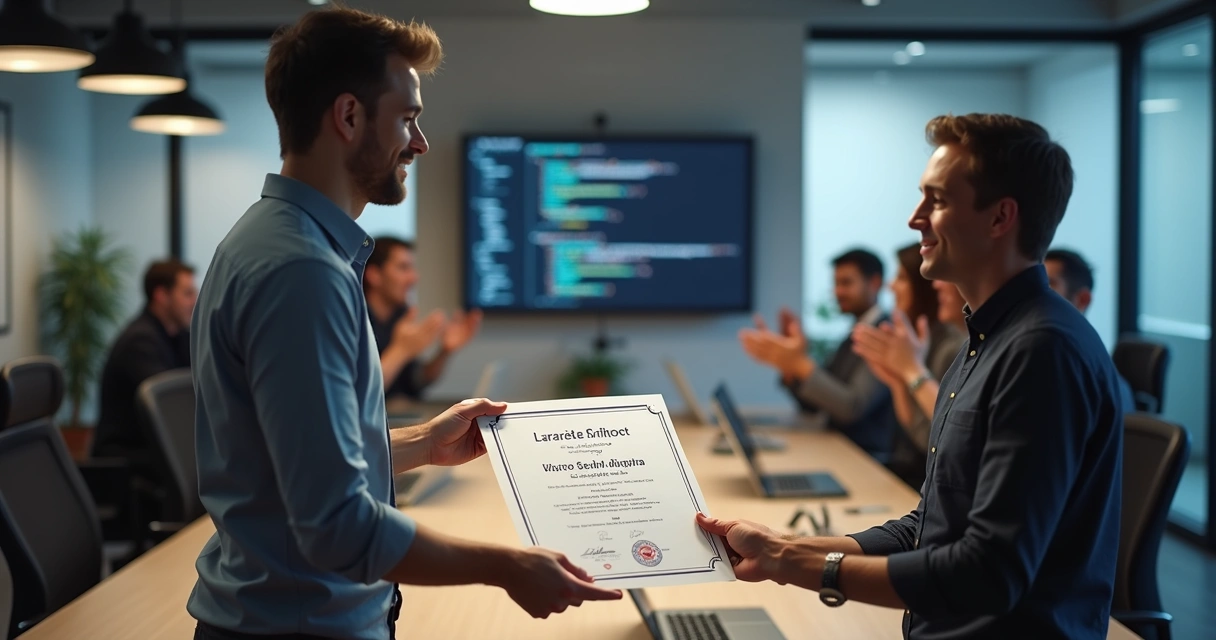
The secret to strong Laravel code: Quality, originality, and sustainability
Over the years, I’ve learned that good code isn’t just about avoiding bugs. It’s about writing systems that other developers—sometimes years later—can pick up, understand, and safely extend. Clean code lowers maintenance costs, while messy code leads to technical debt that can multiply project costs long term.
Strong Laravel partners will ensure:
- Automated testing at the unit and integration level to catch bugs early
- Clear and well-updated documentation for each module and API
- Consistent coding standards for all contributors
- Original, tailor-made solutions for your problem (no copy-paste scripts)
I take this seriously in my freelance work. Before launching any client project, I conduct code reviews and walk the client through key architectural choices, so they feel ownership and clarity every step.
Smart code saves money and sanity.
Ongoing support: Why the work doesn’t end at launch
A common concern I hear is: What happens if something breaks after go-live? At many agencies, ongoing support is an afterthought, which can put clients at real risk.
Great Laravel partners offer:
- Bug fixes and patching for security threats
- Periodic upgrades to keep up with new PHP or Laravel releases
- Performance monitoring and tuning
- Access to real human support, not just automated ticket systems
From my own practice, I’ve seen that clients value clear service-level agreements and coaching for their in-house teams to handle small issues. This lets you sleep at night, knowing your app is always under professional supervision.
Why security, scalability, and performance are non-negotiable in Laravel projects
Business owners sometimes treat security, speed, and scalability as "nice to have" features—until it’s too late. I’ve witnessed projects, even from big competitors, that collapsed under peak load or suffered breaches due to one missed update or misconfiguration.
Here’s where a true Laravel specialist (like myself) makes all the difference:
- Security features (CSRF tokens, proper input validation, OAuth2 support, encrypted data at rest) are implemented correctly, not as an afterthought.
- Database structure, query efficiency, and caching strategies are tailored to your expected user base and lifetime usage patterns.
- Regular penetration tests and updates mean you avoid disastrous breaches.
- Hosting configuration—whether AWS, traditional VPS, or hybrid cloud—is optimized for both speed and cost.
If you want a deep dive on scalable architectures for fast-growing Laravel apps, here’s an excellent resource that could save you months of research.
No user waits for slow websites in 2024. Performance is profit.
Comparing agency models: Dedicated teams, boutiques, and specialized freelancers
Not all Laravel providers are built alike. In my career, I’ve seen three common engagement models, each with specific strengths:
- Large development agencies: They handle a wide variety of platforms and technologies. Sometimes, Laravel is a small part of their stack. You get more project management, but less direct access to lead engineers. Some projects get lost in the shuffle. Response times may lag.
- Boutique Laravel studios: 10-50 people, highly specialized, often only taking on Laravel and adjacent technologies. You get personalized resources and focused expertise, but capacity can be more limited.
- Freelancers or micro-teams: Experienced engineers like myself, who have both technical and business sensitivity, and who own every aspect of the project. This is the most flexible option for companies wanting direct relationships, fast pivots, and cost savings.
The best Laravel partner is one who listens, adapts, and teaches—not just codes.
On several projects, I’ve been called in to rescue apps built by faceless agencies, where clients didn’t even know who was staffing the team. Transparency matters.
Reading about how to choose between agency types is helpful—see further analysis on selecting the right web development partner.
Questions to ask before hiring a Laravel expert
If I could advise every company interviewing potential Laravel teams, I’d share this practical checklist. These questions reveal both technical and communication chops:
- What frameworks, tools, and packages do you use for Laravel projects, and why?
- Can I see real-world case studies—apps aligned with our business goals?
- How do you handle code reviews, documentation, and onboarding?
- What’s your approach to security, scaling, and performance monitoring?
- Do you provide service-level agreements for post-launch support?
- What are your typical project timelines and how do you handle changes to the spec?
- How will you keep me updated, and who will I speak to directly as the project progresses?

You should get clear, jargon-free answers—nobody should hide behind buzzwords or oversell. Direct conversation with references or past clients is also a great indicator of reliability.
The business impact of partnering with the right Laravel specialist
The ripple effect of the right Laravel partnership is enormous. In my consulting practice, I’ve seen:
- Faster time to market—and therefore faster first revenue—thanks to Laravel’s rapid feature development
- Lower costs over time, thanks to maintainable, well-documented code
- Greater agility, letting you adjust your business model and features as you discover new opportunities
- Lower risk, thanks to automated testing, solid documentation, and reliable post-launch support
- Visibility over your project’s costs and milestones—no more “surprises”
This level of partnership transforms not just your application, but the pace and predictability of your business growth.
If you are planning digital transformation or product rollout, learn about how software partners shape startup outcomes with this strategic guide.
A trusted Laravel consultant is an investment, not a cost.
Digital transformation: Laravel’s role in scaling your business
Today’s digital economy favors those who act fast, pivot, and learn from data. Laravel, combined with a skilled team or consultant, shortens iteration cycles—meaning you get faster feedback from users and customers.
Building dashboards, integrating with analytics, adding AI or automation—these are all easier when your application is architected for change from the start. I’ve helped companies go from $0 to thriving revenue precisely by making technical decisions that accelerate business learning. Code should open doors, not block them.
That’s why I, Adriano Junior, believe so strongly in personalized Laravel partnerships: they empower your business, not just your tech.
Why choose me—Adriano Junior—and how I stand apart
While other providers offer Laravel as one service among many, my entire consulting practice is built around driving client success using Laravel, AI, and cloud technologies. My approach is guided by:
- 16+ years of web engineering—delivering in dozens of industries worldwide
- Direct communication and clear project plans—no middlemen or miscommunication
- Cutting-edge AI and automation experience, integrating smart systems that scale and adapt
- Availability for both short-term sprint work and large-scale system design—and always tailored to what the client actually needs
When you hire me, you get:
- Deep technology insight—every project gets a senior’s perspective
- Modern DevOps and automation from day one—saving costs and headaches
- Honest, business-focused advice—even if it means recommending a simpler solution
- Clear agreement on delivery, quality, and support, no fine print or “extra fees”
Many competitors offer “big team” appeal, but too often, clients feel like just another ticket number. My goal has always been to turn every client into an enthusiastic reference—and I measure my success by how strongly my work supports your business, not by project count.
Conclusion: Make your Laravel decision count
Choosing among Laravel agencies, studios, or expert freelancers is not just a technical call—it’s a business decision that shapes everything from budget to speed to peace of mind. In 16+ years across multiple industries, I’ve learned that the projects that succeed are those where the agency or expert cares as deeply about the client’s business as they do about the code.
Don’t hire a coder—hire a partner in your business future.
If your company or startup is planning a digital project and wants certainty, speed, and reliability, now is the time to act. Reach out to learn how my hands-on, business-centered Laravel consulting can make your next venture a success. Let’s make your technology a true driver of growth—together.
Frequently asked questions
What is a Laravel agency?
A Laravel agency is a specialized team of professionals focused on designing, developing, and maintaining web applications using the Laravel PHP framework. They deliver services like custom web app builds, API integration, system migration, e-commerce solutions, and ongoing support, with deep Laravel ecosystem expertise.
How to choose a good Laravel partner?
To pick a strong Laravel partner, look for a proven portfolio, clear client testimonials, strong coding standards, security-first mindset, and reliable ongoing support. Ask direct questions about their methods, see real project examples, and favor those who combine technical mastery with business understanding. Continuous learning and open communication are strong indicators of quality.
How much do Laravel agencies charge?
Laravel agency pricing varies by project size, complexity, location, and the agency’s seniority. Simple projects may start around $3,000—$8,000, while larger, enterprise-grade apps can exceed $50,000. Hourly rates range from $35 to over $150, with freelancers offering flexibility and sometimes greater value for custom needs. Always request transparent, itemized quotes to avoid hidden costs.
Where to find top Laravel agencies?
Top Laravel agencies can be found through curated lists, technology directories, or references from past clients. Start with reputable platforms or resources that outline Laravel specialties, such as some of the leading agencies highlighted in the best Laravel development companies list. Referrals from satisfied clients and direct outreach to experienced freelancers like myself are also very effective.
Is it worth hiring a Laravel agency?
If your project needs scalability, security, and long-term support, hiring a skilled Laravel agency (or a dedicated expert consultant) brings significant business value. Laravel specialists deliver faster, safer, and more maintainable projects than generic providers. With the right partner, ongoing support and future changes become much less stressful and far more predictable.