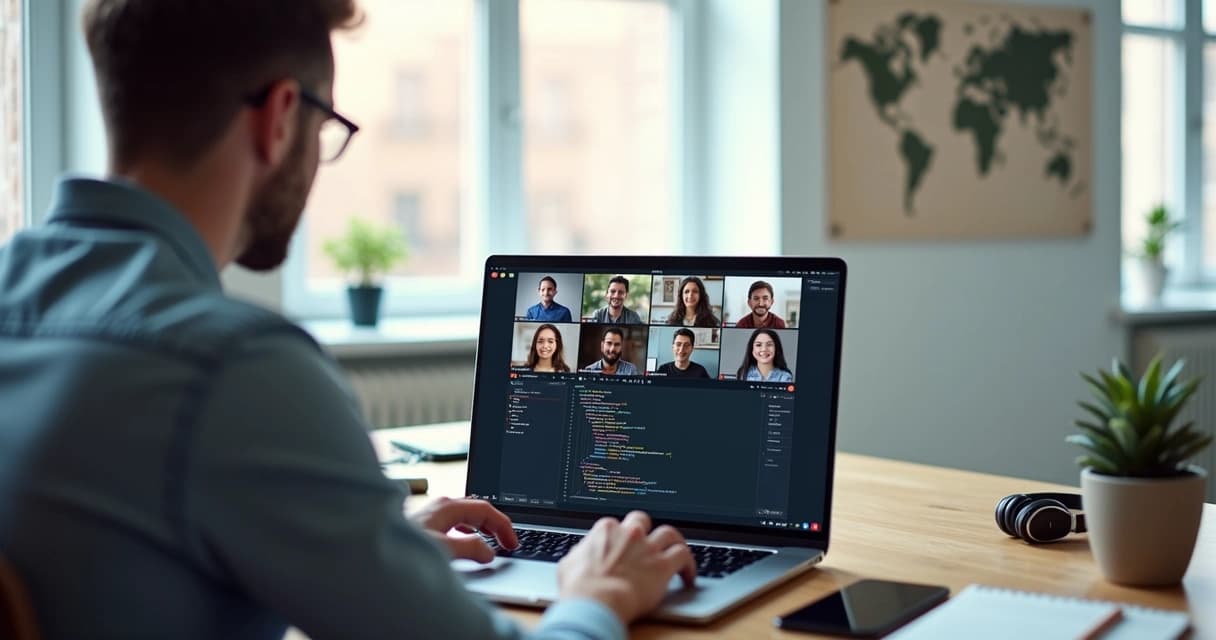
Every company dreams of finding the right person to bring their software vision to life. In my experience, hiring the right senior talent, especially as a freelancer in the United States, can change everything for a fast-moving project, a startup racing against the clock, or a legacy enterprise seeking a modern edge. The ability to bring in proven expertise, just when you need it, is powerful. Over the last sixteen years, I've seen both the challenges and the rewards of this approach play out repeatedly.
The technology landscape in the USA today offers opportunities and a few stumbling blocks for anyone looking to hire a senior software engineer on a flexible, freelance or contract basis. Through this article, I share strategies I have refined over years of building modern, scalable applications—and why candidates like myself, with deep experience in PHP, JavaScript, and cloud services such as AWS, can be the missing link your project needs. From the earliest search to the final onboarding, this is how I, Adriano Junior, help clients turn innovative ideas into reliable, future-proof solutions.
The right freelance engineer does more than write code. They see solutions where others see obstacles.
Why hire a senior freelance software engineer in the USA?
Making the choice to engage a senior freelance software engineer in the USA offers direct advantages that go beyond adding “another coder” to a team. Over and over, I've found these clear benefits:
- Access to specialized skills on-demand
- Flexibility to scale teams up or down rapidly
- No long-term hiring commitments or overhead
- A fresh perspective from someone who has seen many codebases and project types
- Cost control compared to full-time salaried employees
With software projects often moving across different technology stacks, having a partner who can move nimbly—adapting to JavaScript frameworks, PHP back-ends, or AWS pipelines—becomes a huge asset.
I regularly work with companies who simply don't have time to “wait for the perfect full-timer.” With over 1.6 million software developer and programmer jobs open, as studies shared by IEEE Spectrum show, bringing in senior freelance talent is one of the fastest ways to meet demand and keep projects moving forward in the U.S. market.
Key benefits for your business
By hiring a senior freelancer, you get expertise without long-term risk. Here are common situations where this shines:
- Building a new feature or product MVP rapidly
- Scaling infrastructure to handle a surge in users
- Migrating legacy systems to modern platforms
- Troubleshooting mission-critical bugs with advanced depth of skill
- Implementing AI, automation, or custom cloud pipelines
When your business faces urgent goals, you need someone who can “hit the ground running.” As Adriano Junior, my freelance services are tailored to these challenges, serving as both advisor and doer, taking on technical consulting, coding, scaling, and modern solution design. This approach has consistently supported U.S. startups and established teams alike.

What makes senior freelance engineers different?
The freelance senior engineer brings unique strengths to the table, shaped by broad industry exposure and the demands of contract work. I have often seen that companies underestimate this difference until they see the results in speed and quality.
- Broad Technology Knowledge: Years freelancing means working across many tech stacks and domains. For me, constant learning and adapting—whether it's mastering the latest AWS offerings or new JavaScript libraries—comes standard.
- Immediate Value: No “ramp up” phase. I have solved real-world challenges in everything from retail platforms to AI integration, so I step in ready to deliver from day one.
- Results-driven Mindset: Freelancers stand out by delivering value quickly, not just following a job description. My focus is always on outcomes, not busywork.
- Communication: Working remotely and with distributed teams sharpens communication and clarity. I know how to keep clients informed and projects transparent.
These qualities mean that when you hire someone like myself—a senior freelancer with 16+ years in software engineering—you get a true partner, not just extra hands. My goal is always to build solutions that work now and set you up for future growth.
The most in-demand technologies for modern projects
Today’s top software projects don’t stand still. Demand in the USA consistently targets these core technology areas:
- JavaScript (Node.js, React, Vue, Angular)
- PHP (from Laravel to custom frameworks)
- Python (often for AI, data science, automation)
- Cloud Services (AWS, Azure, Google Cloud)
- DevOps (CI/CD, Docker, Kubernetes)
- AI, Machine Learning, and Automation (TensorFlow, OpenAI integrations, etc.)
In my own career, deep experience with these technologies has allowed me to step into complex projects and provide both quick wins and lasting improvements. For example, I’ve helped migrate monolithic PHP applications onto scalable AWS cloud architectures, modernized JavaScript front-ends, and integrated custom AI models to automate manual workflows.
Why versatility matters
When you hire a freelancer with a track record in more than one stack, you unlock options for your future—not just today’s needs. Often, projects need connectors: someone who can bridge front-end and back-end, link legacy systems to cloud APIs, or combine code with modern development operations. That's the value I always aim to provide for my clients.
Mapping project requirements to freelance skillsets
The single most common mistake I see in U.S. software hiring is a “scattershot” approach: posting a job description with generic requirements and hoping for magic. Instead, successful companies take time up front to:
- Describe the end goal or business problem in concrete terms.
- List the real technologies and systems already in place—don’t hide legacy boulders under the rug!
- Rank which skills are must-have, and which are “nice to have.”
- Decide how much technical leadership or guidance you need from your freelancer.
Whenever I onboard with a new client, I open with these same questions. It helps us move straight to building value. Projects become more predictable, deadlines are hit more often, and the entire hiring/selection process is smoother.
If you’re interested in more detailed frameworks for mapping technical needs to freelancer profiles, I recommend reading additional guides like this step-by-step article on senior software engineer hiring. It covers matching skills with use cases and what questions to ask in the U.S. freelance market, based closely on my day-to-day experience.
The full selection and hiring process
Clients regularly ask me what the “best path” is to find, interview, and start working with a top-tier freelance senior engineer. Over hundreds of projects, I've shaped and tested a process that makes these projects work smoothly. Here is the overview that I now recommend to anyone hiring in the U.S.:
1. Define clear goals and timelines
You need crystal-clear project goals before you talk to candidates. Vague briefs waste everyone’s time. For example, is the assignment to build an API from scratch, modernize an e-commerce stack, or fix performance bottlenecks pre-launch? Write these down, map expected milestones, decide on a budget. This is the single best thing you can do to attract quality freelancers like myself—who seek clarity and purpose in the work.
2. Write targeted and realistic job/project briefs
Going too broad or being too rigid in requirements filters out great people. Mention the real skills and your company culture, along with technical details. If you want a partner who can bring DevOps and AI together, say so. From my side, I always answer these tailored briefs with project ideas, practical questions, and examples from my previous work—this saves time and ensures a good fit.
3. Shortlist and vet candidates carefully
- Review portfolios and code samples, not just resumes.
- Look for patterns: Have they delivered similar projects?
- Check publicly available feedback and references.
- Assess depth of experience with concrete examples.
I always encourage my potential clients to ask challenging questions about my experience across different projects. A true senior engineer should be comfortable providing details—not generic claims. This has been key in every successful partnership I’ve built.
4. Conduct focused technical interviews
Good technical interviews test not just “trivia,” but applied knowledge:
- Ask open-ended questions about systems design and past projects.
- Set a short, paid trial task relevant to your real codebase.
- Include a practical code review or pair-programming session if possible.
- Test for communication, not just coding speed.
I prefer interviews that mix practical coding with discussion of architecture. For example, feedback from a recent client involved reviewing one of their tricky PHP microservices and proposing an AWS-based scaling plan. These reveal real skill, not just how someone prepares for “algorithm puzzles.”
5. Assess soft skills and culture fit
Technical skill is table stakes at the senior level, but your freelancer should also communicate well and share your working style. In my experience, alignment on work hours, feedback cadence, and code documentation make the real difference in remote or hybrid teams.
6. Agree on terms and get started quickly
Once you have a fit, set up:
- Clear contracts and scopes of work
- Defined communication and reporting habits
- Quick access to relevant code, staging, and documentation
Time-to-value matters—so don’t let admin or onboarding drag things out. The faster you give a freelancer access, the faster you’ll see results. I always do my part to move this along quickly and transparently for U.S. clients.

Evaluating skills and finding the best fit
I have seen that “checking off skills" on a list is never enough. Instead, companies are much better served by looking for:
- Demonstrated end-to-end project delivery
- Clear communication about decisions and trade-offs
- Ability to document and explain code for future developers
- Handling of testing, scaling, and cloud deployments
- References from past clients or open source work
If a freelancer can point to real business outcomes—not just technical success—it shows they’re prepared to add value, not just punch in tickets. That’s why, for every new client, I always come with case studies, project stories, and specific data on how I helped teams meet their goals. It’s also why I always suggest checking references or reviewing real-world code instead of relying only on portfolio claims.
Questions to ask your freelance candidate
- “Tell us about a project where you had to learn a new technology fast to deliver results.”
- “How do you document features for ongoing support?”
- “What’s your usual approach to setting up AWS environments securely?”
- “How do you handle unexpected issues in a live production environment?”
- “Share an example where your technical consultation influenced the product direction.”
These conversations uncover not just coding ability, but judgment, responsibility, and flexibility—the qualities that separate senior-level freelancers from everyone else. After hundreds of projects, I know that these are what make or break success.
Common hiring platforms for senior software engineering freelancers
There are many places to find available freelance engineers in the USA, but not all of them deliver equal results. Based on what I’ve seen and heard from clients who come to me after a bad experience elsewhere, these are the main options:
- Freelance talent platforms (Upwork, Toptal, Gun.io, etc.)
- Professional networks (LinkedIn, Github, industry Slack groups)
- Specialized boutique agencies or technical consultants
- Direct referrals and trusted word-of-mouth
- Personal web or portfolio sites (like mine—and you’re already here!)
I encourage my own clients to avoid platforms that simply crowdsource a “race to the bottom” on price. Senior U.S. engineers with real experience often avoid these marketplaces entirely in favor of direct relationships, referrals, or mature consultancies. For curated, hands-on support and a transparent process, individual freelance specialists like myself offer far greater value—you work directly with the expert, never getting “handed off” to less experienced juniors.
For larger corporate projects, agencies sometimes claim to offer the right fit. From what I've seen, clients often get higher quality and more consistent communication by working directly with autonomous freelance experts. The best results come from working closely with the person actually building your solution, every time.
Technical consulting, AI integration, and devops: What sets top freelancers apart
A growing number of U.S. companies now need more than just straight coding—they require creative problem-solving across multiple layers of their stack. That’s where my background makes a major difference. Here’s what specialized senior freelancers can provide, compared to both competitors and generalists:
End-to-end technical consulting
The best freelancers don’t just write code—they advise on architecture, design, DevOps, and product strategy. In recent projects, I have:
- Mapped out scalable PHP and JavaScript solutions for fast pivots as user bases grow
- Designed AWS migration strategies to cut infrastructure cost by half
- Drafted technical documentation for handover to in-house teams
- Introduced best practices in API security, reliability, and monitoring
AI and automation integration
The move toward artificial intelligence can create huge business leverage. Many companies struggle to find the right entry point. I have helped U.S. clients:
- Integrate OpenAI, custom neural networks, and automation into core business functions
- Prototype and validate machine learning models for fraud, recommendation, or personalization
- Design APIs that allow AI insights to power web frontends or mobile apps
DevOps for speed and reliability
A modern senior engineer brings DevOps skills to automate testing, deployments, and scaling. My projects often include:
- Setting up end-to-end CI/CD pipelines using GitHub Actions, CircleCI, or AWS CodeDeploy
- Containerizing legacy PHP applications for better reliability under heavy loads
- Monitoring and alerting setup for real-time system health

This blend of technical breadth and hands-on execution is what makes freelancers like myself a wiser investment, especially for businesses who want more than just another coder working in isolation. For practical examples of these solutions, see case studies with senior software engineers for modern projects.
Comparing freelancers to full-time hires (and competitors)
There is a natural question every business faces: Should I just hire another full-time employee? Having seen both sides, I believe the answer depends on specific needs, costs, and growth plans. Here’s how freelancers stack up:
- Speed: You onboard in days, not months—no lengthy HR process
- Flexibility: You add or reduce capacity on-demand
- Cost: You pay for outcomes, not empty hours or overhead
- Expertise: You get immediate senior-level experience, often broader than an average full-timer
- Risk: You test out new approaches or skills with short commitments
Some large consulting groups or talent agencies try to offer “teams on demand.” However, in my experience, direct freelancer-client engagement produces greater alignment and transparency. Clients always know who is writing the code and advising on architecture. They also get faster answers about timelines, tradeoffs, and solutions. This directness prevents the misunderstandings and delays that I often see with bigger competitors.
Cost transparency
Mature freelancers, especially those with U.S. experience, are transparent about rates and project structure. When you work with someone like myself (and other top seniors), you get clear up-front costs and flexibility on payment models—hourly, per milestone, or even monthly if you prefer. This helps companies avoid long-term salary and benefit obligations, and focus instead on tracked, documented value.
When you compare final project cost, hiring a senior freelancer for a focused project is often the smarter investment.
Remote work and managing distributed teams
The distributed work model is now standard for U.S. technology projects. Over the last six years, I’ve helped companies build against timezone and geography—remotely onboarding, collaborating, and delivering success. Here’s what works:
Communication flows and culture
Structured daily or weekly updates help keep everyone moving. I insist on regular calls, comfort with tools like Slack/Teams/Zoom, and asynchronous documentation of progress and blockers. This clarity keeps busy teams aligned and projects moving even when “life happens.”
Transparent documentation and process
- Use shared repositories (Github/Bitbucket) with clear commit messages
- Maintain living project boards (Trello, Jira, or even Google Sheets for smaller teams)
- Document every environment variable, API endpoint, and deployment instruction so nothing is lost across timezones
These simple habits go a long way in building trust. It’s how I ensure every client feels informed and ready to pick up—even if distributed across New York, Dallas, and San Francisco.
Integrating freelancers smoothly
Distributed teams perform at their best when new freelance hires are quickly integrated, not left on the periphery. To accelerate this:
- Assign a main point of contact for feedback and blockers
- Schedule recurring check-ins just like for full-time team members
- Give real access and responsibility—don’t restrict to “side projects” unless you have a specific reason
This creates accountability and motivation for freelance partners like myself, and directly boosts both speed and project impact.

Case studies and success stories
Over the course of my career, I have seen businesses transform by carefully choosing the right freelance expert at the right moment. Here are brief examples from my own work in the U.S. market:
Smart hiring of freelance experts leads to projects finished on time, on budget, and with lasting results.
- E-commerce Scaling, An online retailer reached limits with a custom PHP backend and outdated AWS setup. I redesigned their infrastructure, split critical systems into Node.js microservices, and launched a secure CI/CD pipeline. The result: 30% faster load times, much less downtime, and simple scaling to twice as many users during seasonal spikes.
- Legacy Modernization, A U.S. non-profit with ten-year-old systems needed to add AI-driven personalization to a legacy codebase. Using Python, I created a custom recommendation engine and built API bridges to connect the new model with the old infrastructure—with zero downtime. User engagement rose rapidly after launch.
- AI Product MVP, For a healthcare startup, I designed and coded an MVP web application integrating real-time medical image analysis via AWS Sagemaker and TensorFlow. With rigorous trial deployments and test automation, the MVP was delivered ahead of investor deadlines—and became their core product offering.
If you're interested in more success stories or want specifics on a project similar to yours, you will find deep examples at the detailed guide for hiring senior engineers on scalable projects.
Writing an effective freelance project brief
A strong project brief is key to ensuring you attract the right level of candidate and get the best work product. Having received hundreds of project requests over the years, I can confirm—specificity beats broad demands every time.
- Explain the problem or business goal in one sentence (“We need to migrate our PHP app to AWS so it can support 5x more users during peak summer sales”)
- List out existing technologies in place
- Describe what “success” looks like for your business, not just the code technicalities
- State deadlines, budgets, and available documentation up front
- Indicate what working hours or communication habits you expect from your freelancer
When clients come prepared this way, I can get to meaningful estimates, practical questions, and creative solutions far more quickly. If you need help with template language or examples, there is a comprehensive guide to freelance software engineering hiring steps that I have contributed to, which covers everything from writing the brief to managing the timeline.

Key criteria for long-term freelance partnerships
While some software projects are quick—just fixing a bug or launching a proof-of-concept—the best business outcomes in the USA come from ongoing freelance relationships. Here’s what to look for if you want to invest in a partner who delivers lasting impact:
- Consistency and reliability: Track record of delivering on repeated projects, not just “one-offs.”
- Proactive communication: Regular feedback, transparent about delays or blockers, open to constructive discussion.
- Personal accountability: When mistakes happen, a senior freelancer corrects course, explains what went wrong, and suggests solutions.
- Continuous learning: Commitment to staying current—in the last year alone, I trained in new AWS services, next-gen JavaScript frameworks, and hands-on AI prototyping.
- Open documentation and handover: Creating project artifacts so your in-house team can take over as needed, never leaving you stranded.
I see too many companies get “burned” by short-term hires with no investment in relationship or codebase health. With the right selection and ongoing process, you set up your software for growth, not just today’s deadline.
How to manage project risks
Working with freelancers brings a few natural risks—but, with the right process, these are easy to manage:
- Scope Creep: Be clear up front. Document all deliverables, set milestones, and review regularly. I always keep weekly check-ins routine for complex projects.
- Code Quality: Insist on code reviews, automated tests, and README documentation. I always include these on every client engagement.
- Knowledge Transfer: Make sure freelancers share code, deployment scripts, and any proprietary knowledge openly, so nothing gets “lost” after handover. I offer video walk-throughs alongside written docs.
- Time Zone or Availability: Align work windows as closely as possible. For U.S.-based clients, I keep main hours in EST/PST to avoid delays.
Done correctly, these risks are actually lower than those you face with large, slow-moving agencies or the loss of an in-house senior with no backup. Good freelance partnerships thrive on transparency and alignment.
Integrating freelance engineers into your existing team
Clients often ask how to fold freelance talent into an established team. Here are approaches I recommend (and use myself when joining U.S. teams):
- Onboard with a brief demo of your stack, team culture, and communication norms
- Pair for the first few code reviews, getting comfortable with mutual feedback
- Assign a clear “area of ownership” for the freelancer—don’t leave them with no real authority!
- Mix in social or informal interactions, even by chat, to build rapport
Successful integrations treat freelancers like valued contributors, not just short-term task rabbits. When this happens, my productivity and project ownership skyrocket—and your project’s quality does too.

Reference checks, documentation, and project handoff
At the end of a freelance engagement (and sometimes midway), you’ll want to check for:
- Documented codebase, environment setup script, and README files
- List of architectural tradeoffs and known limitations or tech debt
- Contact info for follow-up or knowledge transfer sessions
- Open reference for future projects—either as backup or extension
This ensures your investment lasts long past the project’s initial close. My process always includes handoff notes, access cleaning, and Q&A walk-throughs for your team. You keep freedom and flexibility, instead of depending entirely on one person.
Measuring project success: KPIs and outcomes
How do you know your freelance engagement was a success? I always agree upfront with clients on these sample KPIs, tailored to the project:
- On-time delivery against milestone deadlines
- Performance and load improvements (measured in speed, uptime, capacity)
- Reduction in bug reports or manual intervention
- Increased feature velocity for your product teams
- Positive user feedback, or higher net promoter scores (NPS)
By keeping our eyes on these real-world results, both clients and freelancer win: clear value for investment, honest feedback, and a basis for further improvement or partnership. If you need more guidance on measuring success, there's a detailed breakdown at the guide to hiring the best freelance software developer.
Legal, compliance, and payment concerns
For U.S.-based companies, it’s straightforward to bring on local or remote freelancers, especially with transparent paperwork and up-front agreements:
- Use written contracts outlining scope, deliverables, and confidentiality
- Set clear payment terms, hourly, milestone, or retainer—all spelled out ahead of time
- Prepare W-9/1099 paperwork for U.S. freelancers or clear compliance for remote, international hires
- Define intellectual property assignment up-front (in nearly all cases, code is “work for hire” and fully transferred to you)
Leading freelancers, including myself, are comfortable with these practices and keep open books for our clients. Up-front agreement and documentation ensure everyone is protected.

When and why I recommend hiring a senior freelance engineer
After 16 years in software, if I could sum up my advice for U.S. managers, founders, and CTOs it would be this:
- When speed matters and the cost of delay is high (product launches, user base jumps, new integrations)
- When you need specific expertise that your current team lacks (AI, cloud, advanced DevOps)
- When your project needs hands-on consulting—not just code
- When flexibility, transparency, and measured outcomes are more important than institutional politics or headcount
- When you want someone who can “see around corners” from many years of cross-industry experience
I have seen firsthand how working with a top-tier freelancer can change the conversation from “What can we get done this month?” to “What could we achieve if we had the right partner now?” That’s what I offer to every client— technical skill, yes, but also practical business sense and a commitment to ongoing partnership.
Why choose me, Adriano Junior, for your next project?
My clients don’t just want code—they want a senior partner who cares about business success.
- 16+ years hands-on experience with JavaScript, PHP, AWS, and cutting-edge cloud, AI, and DevOps tools
- Proven track record building robust, modern, and scalable apps
- Direct, personal communication and deep involvement from planning to delivery
- Advanced consulting: technical guidance, architecture, and automation as needed
- Transparent pricing, full documentation, and full IP handover
- Trusted by leading U.S. startups, scale-ups, and enterprise teams
If your business needs a senior freelance engineer who can deliver—fast, flexibly, and with measurable impact—I welcome the chance to talk about your requirements. Every engagement is personal for me: I only take on work where I can make a meaningful difference for your goals.
Conclusion: Take the next step with Adriano Junior
Finding, hiring, and successfully integrating a senior software engineer as a freelancer in the USA is one of the best ways to meet urgent business needs, broaden your team’s skills, and move faster on modern, scalable projects. With U.S. technology demands climbing and platforms evolving quickly, you want an expert with deep real-world knowledge.
As Adriano Junior, I empower teams to turn ideas into robust applications and cloud platforms, all with transparent process and proven results. If you are ready to accelerate your software goals, let's start the conversation. Visit my homepage to see available services, or use one of my in-depth guides linked throughout this article for more specific technical advice.
Your project's future starts with the right engineering partner. Make that choice with confidence—and with a trusted, senior freelancer who is ready to help you succeed.
Frequently asked questions
What does a senior software engineer freelancer do?
A senior software engineer freelancer provides advanced technical solutions on a flexible basis, including software development, system architecture, code reviews, and technical consultation. They usually carry end-to-end responsibility on projects—from design to delivery—and specialize in matching business goals with the right technical implementation. In my role, this has included building scalable apps with JavaScript, modernizing PHP back-ends, implementing AWS cloud solutions, and delivering ongoing DevOps support.
How much does it cost to hire one?
Rates depend on experience, location, and project complexity but typically range from $80 to $180 per hour in the U.S. market, with project-based or milestone pricing also common. For senior-level work, expect transparent costs and a clear outline of deliverables before starting. I always offer flexible models to fit client needs—whether hourly, fixed-scope, or monthly retainers—making it easy for you to control your budget while getting top-tier results.
Where can I find the best senior freelancers?
The best senior freelancers in the USA are often found via professional networks, referrals, or specialist portfolio sites—rather than generic “gig” platforms. Sites like LinkedIn, private tech communities, and dedicated freelancer sites are good starting points, but working directly with a proven expert like myself offers the highest reliability, communication, and code quality. Always review portfolio samples, seek out client feedback, and check technical depth.
How to choose the right freelancer in USA?
To choose the right freelancer, look for a mix of technical mastery, hands-on project success, strong communication, and transparent references. Vet candidates by asking about similar past challenges, reviewing code samples, and proposing a small paid trial task on your real codebase. Soft skills matter as much as hard skills—clear updates, honest feedback, and structured documentation are essential for remote work. I bring these standards to every engagement, ensuring a true business partnership.
Is hiring a freelance senior engineer worth it?
Yes, hiring a freelance senior engineer is worth it for companies who value speed, flexibility, and deep expertise for mission-critical technology projects. You gain the ability to move faster, control costs, and access niche skills that empower your team—from rapid MVPs to large-scale cloud or AI integrations. My experience shows that for focused, results-driven projects, the freelance model is often the smartest path to business impact.